
A GHOST IN VISALIA

INTRODUCTION

Visalia is a small city in central California.

In this particular story, some of the events were real. When my wife and I moved into this house, a few strange things began to happen: noises, such as slamming doors and music coming from nowhere, along with other mysterious little details. Still, the most terrifying thing happened when my wife was in the kitchen and I was in my room. While listening to a soft rock radio station, the music became louder and louder. It was very spooky. After that, it happened a couple more times.

The part about my daughter and my grandson was real, too.

But it’s not a horror story. It’s a funny one.

*****

Before I signed the rental contract, the landlady told me that an eighty-six-year-old man had died in the first bedroom. She said she needed to disclose it before I moved in, so I wouldn’t quit suddenly without signing a thirty-day notice.

At the time, I didn’t pay any attention and disregarded the comment as useless and unimportant. Later, through the neighbors, I learned that the man had lived there for 15 years. After that, three new tenants moved in and out in rapid succession.

The house was old and unattractive, with a garage attached to the kitchen and living room. The family room was next to the dining room, with a narrow hallway and three bedrooms. The floor plan could have been better. The kitchen and dining room featured dark brown paint, carpet, and vinyl flooring. The house could be the ugliest house on the block. I couldn’t find anything attractive or pleasant about that house, but I’ve never been a person with many demands. Therefore, I signed the contract.

After a few weeks, the house was finally home. I didn’t care about how ugly it was.

One day, I was alone in the house, watching TV in the living room. The volume was low, and it was early at night when, suddenly, I heard the radio turn on in one of the back rooms.

I heard a male voice for a couple of seconds. I turned the lights on and went to investigate. I checked in my bedroom, where I had an alarm clock, but it was off. I had another radio, but it was unplugged. I thought it was bizarre, but I returned to watch television.

As the days passed, my wife and I continued to hear normal household noises, such as wood creaking and expanding or wind slamming doors.

Another day, I was reading in bed around 2:00 am when I heard the patio sliding door vibrating for a few seconds. I thought it was an earthquake, but nothing else shook. I convinced myself that my dog, Diego, was pushing the glass door. I wanted to avoid entering the hallway and passing the older man’s room at 2:00 am.

One morning, my wife was cooking in the kitchen and listening to music on the radio. I was in my room when the music suddenly became too loud. I jumped and ran straight to the kitchen. My wife had a look of terror. From there, we both could see the stereo system in the living room—the volume knob turning up by itself as far as it could go.

When my daughter and ten-month-old grandson, Damian, visited for a week, I put them in the old man’s bedroom. At first, she said it was warm and comfortable, and she had no complaints. They were happy, and I was pleased.

My grandson was handsome and intelligent, just like his grandpa.

But one night, my daughter came into our room carrying her son.

“Dad, somebody’s moving the bed. Even Damian woke up. We’re staying in your room now.” Then, she asked me to bring our inflatable mattress from the living room to our room. I stood bravely and confidently, but my knees shook when I passed that room.

The following day, I knew I had to confront the old man. I needed to show I wasn’t afraid of him and wouldn’t run away like the other tenants. After all, he wasn’t the one paying the rent. I moved my computer from the garage to his room. That way, I would have to spend more time in that room.

After my wife left for work, I asked him why he was still in the house. I kept talking to him for a few more days, sometimes even in Spanish, but it appeared he was gone. Or maybe I scared him off, or perhaps he never existed at all.

When I had almost forgotten about him, that’s when I saw him.

A mirror hung on the bathroom door; when closed, I could see that mirror and the one above the cabinet sink. So I could see my body, front and back, simultaneously.

That’s when I saw him. I was in shock but not afraid. It took me by surprise; I jumped back, and in the blink of an eye, he wasn’t there anymore. I saw him, but I wasn’t sure whether he was inside the mirror or behind me. He was wearing a light blue suit and a tie. He looked harmless.

“So you’re here after all.” I said, “I hope you’re not shy.” What’s your name? Come on, man, I know you already know my name. Tell me yours.”

“My name’s Peter Shelby,” he answered softly, in a hollow, tired voice. Instead of getting scared, I got genuinely excited. “Tell me, are you with God? Have you seen Him?” I asked him.

“Ha! I was eighty-six when I died. I was baptized and received my First Communion. I gave the church a small fortune in donations. But God was nowhere to be seen. I have tried my whole life to avoid breaking the Ten Commandments. And it was all for nothing. I still hope He shows up.”

“You might be in Purgatory, and God could be undecided on what to do with you. Maybe you’re paying for some pending sins. Who knows?” I said.

“I hope you’re right because it’s boring here. That’s why I was making noises and trying to manifest my disappointment. I wasn’t satisfied with this situation.”

“But why did you have to scare my daughter?”

“You were not paying attention, and that was frustrating. Being alone, bored, and ignored, I couldn’t take it anymore. Tell your daughter I’m sorry.”

“No, you tell her yourself. No, wait, leave her alone. Never mind. But answer me this: what’s your purpose in life? I mean, in death?”

“I have no idea. I think I need to do something, but I’m not sure what. My wife died three years before me. We were happy in this house. We spent our best years here.”

“And where do you think your wife is?”

“She must be in heaven, I guess. She was a much better person than I was. I wish I could communicate with her, be with her, and maybe I can ‘die’ in peace.”

I started to feel relaxed, almost as if I were in a normal situation.

“Okay, next question, do you eat, sleep, take showers, brush your teeth, or go to the bathroom?”

“No, no, no, no, and no.”

“Can you cross walls or doors? Can you touch me or hit me? Do you touch the floor when you walk?”

Yes, I can cross anything. No, I cannot hit you, although I tried a few times, ha, ha. I float a couple of inches above the surface; I don’t need to sit or rest because I don’t need any energy. I’m dead.”

“I just need to tell you something; you cannot appear or manifest yourself in any way while my wife is here. Otherwise, she’ll bring the priest with his holy water and won’t rest until she makes you disappear.”

“But she seems to be such a nice lady.”

“Well, just consider yourself warned. Oh, one more thing: How should I call you, Peter, Mr. Shelby, Poltergeist, Mr. Ghost, or what?”

“I don’t care. Let’s be friends and make the best of it, okay?”

“Is there anything I can do for you? You know, to help you do something, find something. Talking to a ghost is so weird. No one would believe me.”

“If you tell everybody you can talk to a ghost, they’ll put you in a mental hospital. Oh, and yes, you can do something for me. I want to go to the cemetery and see what kind of grave my family bought for me.”

“Okay, it’s a done deal; we’ll go tomorrow morning. What time do you want me to wake you up?”

“No need for that. I’ll be ready anytime.”

“Alright, see you tomorrow, Peter.”

“Yeah, good luck with that.”

In the morning, when I went out of the front door, I left it open for a few seconds, then I softly whispered, “Are you out, Peter?”

Then I opened the passenger door and, after a few seconds, asked, “Are you in, Peter?”

“Yes, I am. Thank you.”

“Okay, now, shut the door,” I said.

“How?” he replied.

“Okay, okay, I’m sorry.” Then, I went around and closed the passenger door.

“Okay, Peter, put your seat belt on.”

“Oh, you’re so funny!”

“Peter, do you want to drive?”

Then, ignoring my last question, he said, “Man, you need to replace this old piece of junk.”

“Do you want to walk? Do you want me to call you a taxicab, or do you want a limousine?”

“Sorry, sorry, can we just go already?”

As I started driving, I asked him, “Hey, Peter, do you go out of the house to walk or float around town?”

“I tried a couple of times, but I think the dogs can see me. They bark at me, and I can’t stand it. It isn’t charming. They want to bite me, and I want to kick them. Your little dog, what’s her name? Yes, Frida, when I go to the backyard, she won’t leave me alone. She follows me around and keeps barking all the time. It’s so annoying. I don’t go to the patio anymore, but Diego, the other dog, doesn’t know I exist. And he’s right.”

We had to look for his grave at the cemetery because he couldn’t remember where they buried him. When we found it, he said, “Those cheap bastards! Look at my wife’s grave site, top-of-the-line! Now, look at mine. The headstone looks secondhand, so small and ordinary. But at least someone brought me flowers, and they look fresh. There’s a note in them. Can you please read it for me?”

“Yes, Peter. It says, I miss you, Uncle Peter. I hope you’re happy wherever you are. I will always love you.” Signed by Nancy Shelby.

“Oh, my dear Nancy. My favorite niece.”

Back at the house, he asked me to write a letter to her.

My dearest Anais Neess:

I’m still at my house. I’m stuck somehow. I made friends with the new tenant, and he’s helping me deliver this note to you. Please, believe me, this is not a joke. And please don’t be afraid. I left some money for you. You’re the only beneficiary. He will provide you with more details on how to obtain this money. I didn’t put this in my will because I didn’t want the rest of the family to know about it.

I will keep you in my heart forever. I love you, Nancy.

Peter Shelby”

After searching for a few minutes on my computer, I found a government site for unclaimed money—a Savings account under Peter Shelby’s name for $45,000. I wrote down some account numbers and other details, added a separate note to the letter, and sent it to Nancy’s address.

He said Nancy was a nice girl, and she might give me a commission for helping her get this money. I said I didn’t care. Then, I asked if he could show himself again as he did in the bathroom mirror, and he said, “I have no idea how that happened, but one time, while I was watching TV with your wife, I saw my reflection on the TV screen.”

“You watch TV with my wife?”

“Yes, all the time. I sit next to your wife all morning, but I disappear when she changes the channel to her Mexican soap operas. I like it when she listens to her music while cooking. We like the same kind of music except for her mariachi songs.”

“And how can you move things around or make noises if you say you can’t touch anything?”

“Oh, I don’t know. I might have telekinetic powers when I’m desperate or frustrated, but I’m not sure.”

I wanted to try another experiment with Peter, so I asked him to come out to the backyard with me.

“Okay, Peter. I want to paint your body, soul, or spirit with your permission. You stand right here in the middle of the patio. I’ll bring my spray paint gun and some white paint and see what happens, okay?”

“Okay, that sounds like fun,” he answered.

After I gathered all the necessary items, I asked if he wanted a mask, and he said, “What for?” Then I said, “Okay, close your eyes,” and he repeated, “What for?”

“Okay, just stand still,” I said and began to paint him. Then, my little dog Frida came and started barking around him. We couldn’t stop laughing out loud.

That’s when my neighbor’s head appeared above the fence and asked, “Hey, why are you painting your dog? Are you crazy or something?” Then, I realized he was right. Frida had white paint all over, and I didn’t know where Peter was, so I couldn’t stop laughing.

Before my wife returned home from work, I asked Peter if he wanted to do something the next day. “Yes, if you don’t mind, I’d like to go to church and talk with God because I don’t think he’s in this house.”

The following morning, after a long absence, I returned to church. I had been busy doing nothing. But I knew I didn’t need intermediaries, priests, or churches to talk to God.

When Peter finished with God, he whispered in my ear, “Let’s go. I’m ready.”

On our way home, he said, “I have a feeling that we won’t be able to be together or communicate anymore. I appreciate your friendship and your companionship very much. I hope to see you in my ‘other’ house someday.”

We found a woman knocking at the front door when we returned home.

“Hi, I live in this house. What can I do for you?” I asked. She seemed to be in her thirties; she had a quiet and tender beauty. She seemed a little shy.

“Hi, my name is Nancy Shelby. I believe I received a letter from you. At first, I thought it was a tasteless joke, so absurd and incredible. However, when I checked the account, I confirmed it was indeed true. I need to tell you how fortunate you are to be able to communicate with my Uncle Peter. He was such a good person. At his funeral, my mother told me my uncle Peter had paid my college tuition. I knew my mom didn’t have the means to afford it.”

“But who’s Anais Neess?” I asked her.

She smiled, “It’s a game of words, Anais Neess, or ‘a nice niece.’ I always loved it when he called me that.”

After that day, Peter disappeared from the house. I went crazy talking to him in every room, to no avail. There were no signs of him anywhere. I missed him a lot. Then, one day, I received a letter from Nancy, a note with a few words, a check for $5,000 made out to me, and, most importantly, a picture of Peter.

I keep that photograph on my desk, next to my computer, in his room.

THE END

Edmundo Barraza

Visalia, CA.

Nov-2010

U.S. Copyright Office

TXu 2-366-623

04-27-2923

PROSA PROSAICA

Amor leal y promiscuo hacia el barrio de mi juventud.

La colonia Moderna, un nombre perfectamente inadecuado. Mi vecina, la Plaza de Toros Torreón, coloso de cemento, infernal y abominable, pero a mí me parecía perfecta y con una capacidad inverosímil. (Ojos neófitos e infantiles). Las corridas de toros y la lucha libre, espectáculos al alcance de todos, entrada a los niños: un peso. Siempre deseando ver a los dos el mismo día, en la misma arena y al mismo tiempo.

El Canal del Coyote, río en miniatura, escaso y sucio, para mis ojos de niño aventurero, el tajo era el río Nilo y el Amazonas juntos; ahí aprendí a nadar (esquivando perros muertos).

Cada cuadra era un potencial campo de fútbol; mi felicidad era desmesurada: cada día, un nuevo aprendizaje, nuevos juegos, nuevos trucos. El trompo, el Yo-Yo, el valero, la resortera, el velit y muchos más, todos accesibles y baratos. Juegos para niños de barrios pobres. Los de la colonia Torreón Jardín nunca supe a qué jugaban.

El juego del bote, el pozito matón, el quinceado, el chinchilagua y el del tacón empujando una moneda. Si no estuviste ahí, no me has entendido, pero si fuiste pobre, lo sabes todo. Tal vez solo con nombres diferentes. Si fuiste pobre, fuiste afortunado.

Los domingos sin un veinte en la bolsa, con lágrimas en los ojos y la panza llena de hambre. Me acostumbré a esa hambre; ahora no me molesta ni me preocupa y hasta la disfruto. Para los niños pobres, la respuesta a sus peticiones siempre era después, siempre después. Debo afirmar que esto no fue constante.

Después, fui empujado a la iglesia, a la religión y a la aburrición. Eso nunca me benefició en nada. Nomás era entrar a la iglesia y me entraba un letargo insoportable. Renuncié y me rebelé, nunca jamás asistí, y seguí siendo bueno.

Caminar a la escuela veinte cuadras solo para ahorrarme veinte centavos del autobús y así comprarme una gordita del Mercado Juárez de regreso a casa. Caminando también. Y si no era la gordita, tal vez podía escuchar una canción en la rockola de la Plaza de Armas.

En la escuela, todas las niñas eran inalcanzables y mi timidez era inmensa. Mi corazón deambulaba solitario y abandonado.

Luego descubrí la música, los Beatles, los Monkees, Creedence. Cosa rara, para mí sólo inglés y nada más. El rock and roll se metió en mis entrañas y allí permanecería hasta que yaciera en mi frío féretro. Luego, lo inherente al rock, a los conciertos, a los experimentos, a la convivencia, eso nunca llegó. Ni en sueños. No por mucho tiempo.

Escuela, libros, cine, fútbol, todo esto sí me gustó. La vagancia me agradó aún más; el billar y mis amigos lo cambiaba por todo. Luego, una cerveza, un cigarro y todo se veía mejor (qué percepción tan absurda). El cine me gustó desde el principio. (Otra frustración de falso pueblo puritano.) Yo, deseando ver Vaquero de Medianoche (Midnight Cowboy), ni siquiera me permitían entrar a ver las de James Bond. Podía comprar tequila, emborracharme, fumar y hacer otras cosas peores, pero no podía ni ver al 007.

Luego, mis años de calentura, siempre deseando inventar un aparato que me permitiera ver a las muchachas en toda su gloria, algo así como unos lentes con los que pudiera verlas sin tanta ropa. Curiosidad diaria e insaciable. Luego aprendí a usar la imaginación para satisfacer esa curiosidad.

Mi primer encuentro sexual, nada vale la pena mencionar. Irrelevante, frío y olvidable. Después aprendí, practiqué y combiné el amor y el placer y todo mejoró.

Mi padre, lejano, ajeno, bueno, siempre bueno, él deseando ser admirado y yo deseando ser considerado. Mi buen padre, con sus sueños dormidos y anhelados. Suena familiar.

Mi madre, siempre ocupada y preocupada, convidando amor, cuidados y dulzura, nunca egoísta, con su corazón desbordado de cariño hacia el prójimo y repartiendo su sabiduría escasa y excusada.

Aun así, con todas las carencias y privaciones, mi vida en Torreón fue increíblemente feliz. Amo a mi familia, a mi barrio y a mi juventud.

Y si tuviera otra oportunidad, regresaría y haría todo igual.

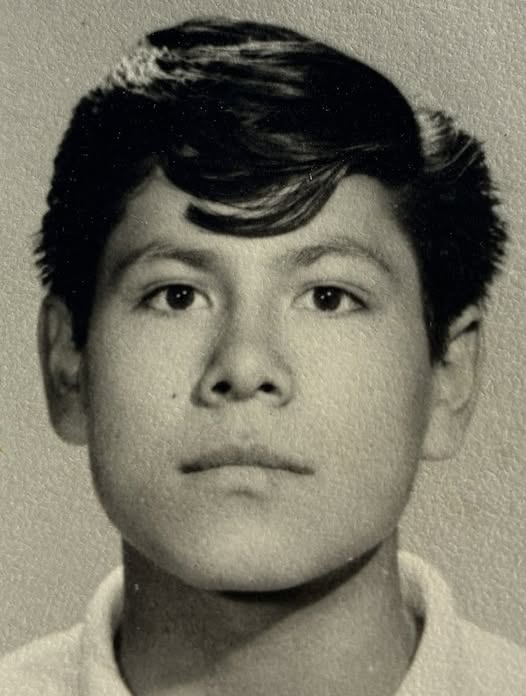
(Tenía diecisiete años en esa foto.)

Edmundo Barraza

Visalia, CA.

Mar-2012

UN DÍA EN MI VIDA

El peluquero casi había terminado de cortarme el pelo cuando escuché el inicio de una canción en un pequeño radio. Primero, un solo golpe de tambor acompañado del piano, seguido por la guitarra y luego por el órgano vibrante. El primer sonido captó toda mi atención con su hermosa melodía.

No entendía ni una palabra de la letra en inglés. Antes de escuchar esa canción, había escuchado a los Beatles y a Elvis: buena música, pero nada comparada con esto. La canción me llegó directamente al corazón. En ese momento, habría dado cualquier cosa por entender la letra.

Hasta entonces, mi joven mente se había negado a aceptar otros tipos de música. Para mí, solo existía el rock. Mi mente bloqueaba todo lo demás. Mi incapacidad para entender la letra no me impedía disfrutarla.

Yo tenía quince años y vivía en Torreón, en la Colonia Moderna, cerca de la Plaza de Toros. Era el verano de 1967. En aquella época, no tenía ningún amigo al que le gustara el rock and roll tanto como a mí.

Cuando el peluquero terminó, la canción aún no había terminado. Me quedé allí hipnotizado. Me miré en el espejo, deseando que la música nunca se acabara. Entonces, me di cuenta de que el barbero me miraba fijamente. Yo estaba seguro de que él pensaba: “¿Qué le pasa a este niño tonto?”

Pero él tenía razón. Yo era un niño tonto porque si corría lo suficientemente rápido hasta mi casa, podría escuchar el resto de la canción y averiguar el título. Estaba a tres cuadras de casa. Y eché a correr. No vi las aceras agrietadas, las carreteras sin asfaltar, ni a mis amigos jugando al fútbol en la calle, ni la tienda de abarrotes, ni la carnicería. No oí cantar a los pájaros, ni ladrar a los perros, ni ningún otro ruido. Seguía escuchando la canción más bonita que nunca había oído.

Vivíamos en el segundo piso de una casa de dos plantas. Llegué arriba en un santiamén. Cuando fui a mi habitación, aún podía escuchar la canción durante aproximadamente un minuto. La voz humilde, autoritaria y hostil. La dulce y triste armónica, todo junto, perforó el centro de mi alma. Y la parte en la que el órgano lloraba, lleno de alegría o de dolor. Me provocó mi primer orgasmo mental.

Al terminar, dijeron el nombre de la canción y quién la tocaba. En ese mismo instante supe que tenía que comprarla de inmediato. Lástima que ya había gastado algo de dinero en mi corte de pelo. Qué desperdicio.

Fui a pedir dinero a mis tres hermanas. A la primera, sin éxito, era la tacaña. No me dio nada. A la segunda, la piadosa, le pedí dinero para la limosna de la iglesia del día siguiente y me dio algo. Y a la tercera, la que más me quería, le conté la verdad. Me dio el resto.

Compré el disco. La gente solía llamarlos «45» porque giraban a 45 revoluciones por minuto. Lo escuché toda la tarde. Incluso marqué el disco y conté cuántas vueltas daba en un minuto. Tenían razón: 45 veces por minuto, unas 280. Ese día escuché esa canción docenas de veces y cada vez me gustaba más.

En ese momento, me prometí a mí mismo que aprendería inglés antes de morir.

Cualquiera podría aburrirse después de escuchar la misma canción varias veces seguidas, pero yo no, no con esa canción. Esa noche ni siquiera vi la televisión. Cené, me di un baño y volví a mi habitación para escuchar ‘mi canción’ unas cuantas veces más antes de dormirme.

Probablemente pasaba la medianoche cuando el sonido de la música me despertó. Me levanté, encendí la luz, apagué el tocadiscos y volví a dormirme. Pero la música me despertó de nuevo. Esta vez era la radio, pero tocaba la misma canción. Y, una vez más, la apagué.

Volvió a ocurrir lo mismo. Enojado y asustado a la vez, desconecté el cable del tomacorrientes y desenchufé la radio. Lo quité de la pared, le quité las baterías y lo metí debajo de la cama.

Eso tendría que ser suficiente.

La siguiente vez que ocurrió, estaba asustadísimo. No quería abrir los ojos. Pensaba que Satanás me estaba haciendo una broma debajo de la cama. Reuní todo mi valor y me metí debajo de la cama. Tenía pensamientos aterradores. Imaginaba a Lucifer agarrándome de los brazos y arrastrándome al infierno. Pero no, lo único que había allí era mi tocadiscos. Lo tiré al piso de cemento de la planta baja, donde se rompió en mil pedazos.

Por la mañana, mi madre me picaba con el dedo en las costillas y me decía: “Despierta, hijo, tenemos que ir a la iglesia”.

Cuando abrí los ojos, vi mi tocadiscos con mi nuevo disco, enterito, intacto, listo para ser tocado mil veces más.

Pero primero tenía que ir a la iglesia a rezar.

Y le rogué a Dios que me permitiera volver a disfrutar de la música sin recibir ningún castigo.


*** “Like A Rolling Stone” — Bob Dylan. Duración: 6:31
La mejor canción de todos los tiempos. Revista Rolling Stone 2004


Edmundo Barraza

Visalia, California.

Junio de 2012

U.S. Copyright Office

Case: 1-15079426771

01-17-2026

MARCELINO

En el México de mi infancia, en el México donde crecí, todos los barrios marginales tenían uno. Sus familias los escondían, con mucha vergüenza, en las habitaciones traseras de sus casas. Les ponían diferentes nombres: lunático, loco, desquiciado, chiflado, demente o cosas peores.


Mi madre me enseñó a ser respetuoso con todos y a no reírme nunca de nadie con deficiencias mentales o físicas. Aprendí de su ejemplo.


En mi barrio pobre, tenía un amigo de mi edad; él tenía un hermano que la mayoría del barrio ni siquiera sabía que existía. Lo mantenían apartado y recluido en una pequeña habitación detrás de la cocina. Tenía la cara deformada. Nunca pude adivinar su edad y tenía una discapacidad mental. Solo lo vi una vez y me entristeció su desgracia. Sé que no suena bien, pero cuando vi a Quasimodo en el cine, me recordó a él. El pobre niño tenía que depender al cien por ciento de sus padres.

Luego estaba Marcelino; él era un poco menos dependiente, pero cualquiera podía ver a kilómetros de distancia que padecía de alguna deficiencia mental. Podía trabajar. (más o menos) Necesitaba trabajar para mantener a su hermana menor y a su madre (como descubrí más tarde).


No vivía en mi barrio. Solo lo veía cada dos o tres semanas. Ese era el tiempo que tardaba en recorrer su ruta. A veces lo veía en otras partes de la ciudad, pero siempre en las zonas más pobres. No conocía a su familia ni sabía dónde vivía. Tenía curiosidad por saber dónde dormía. Marcelino a veces cambiaba de ruta para evitar las verduras podridas y otros desperdicios que cruelmente le arrojaban algunos niños y hombres de todas las edades. De vez en cuando, algunas señoras lo defendían, pero su presencia nunca era permanente.


Yendo de puerta en puerta, Marcelino ofrecía cantar tu canción favorita a cambio de unas monedas o de un taco de las sobras de la comida. A veces también preguntaba si tenías un viejo disco de 45 rpm para su tocadiscos. Podías pedir tu canción favorita, pero él te cantaba la que a él se le antojaba. De cualquier manera, nunca se le entendía nada. Además, su repertorio era muy limitado.


Llevaba una caja de madera con un clavo oxidado que sobresalía del centro. Probablemente era su única posesión rescatada de algún callejón. Por diez centavos te cantaba una canción. No cantaba nada, solo tarareaba y murmuraba la misma melodía sin importar la petición. Con sus dedos regordetes, daba vueltas a sus discos preciados en la caja de madera y tocaba tu canción.

Para hacerlo enojar y burlarse de él, los niños mayores del barrio le arrebataban los discos a Marcelino, los lanzaban por encima de su cabeza hacia otro niño y lo hacían perseguirlos hasta que alguien finalmente dejaba caer uno. Marcelino lo recogía, lo limpiaba con su camisa sucia y se dirigía de nuevo a su tocadiscos para empezar a cantar de nuevo.

Su mente era demasiado lenta para darse cuenta, pero tenía una inocencia excesiva; siempre caía en sus bromas. Cuando lo veían a una cuadra de distancia, los niños subían a los árboles y a los techos. Cuando Marcelino estaba lo suficientemente cerca, saltaban de sus escondites para echarle agua o cáscaras de sandía, huevos podridos, tomates o cualquier cosa que tuvieran a la mano.


Nuestras madres lo defendían, pero no se daban cuenta de que años antes habían sembrado el resentimiento en nuestras pequeñas mentes, diciéndonos: “Si no me obedeces, Marcelino te va a llevar”. Comparándolo con el coco, ‘te va a llevar el coco”


Yo no era ningún santo; también era travieso. A menudo esperaba agazapado en mi balcón, armado con ligas y cáscaras de naranja, listo para que las víctimas desafortunadas pasaran por delante de mi casa. Sí, a veces yo también fui travieso y pícaro, pero era selectivo. Yo evitaba a las viejitas, a las niñas guapas y a Marcelino.


Cuando su ruta lo llevaba a mi casa, yo corría con mi mamá para que preparara un taco con lo que hubiéramos comido. O a veces me daba diez centavos, pero mi mamá nunca se negaba. Algunos días, Marcelino aparecía con moretones o raspones en la cara y en los brazos, y entonces le pagábamos dos canciones. Todo el mundo sabía que cuando estaba ensangrentado era porque alguien se había pasado de la raya, y algunos se sentían mal por ello. Sin embargo, toda esa compasión era temporal y se desvanecía antes de que él se fuera al siguiente barrio.


Algunos domingos, mi padre me daba dinero para ir a la iglesia y nunca se me ocurrió usarlo para mi propio placer. Nunca lo guardé para mí, ni una sola vez, excepto para dárselo a Marcelino cuando estaba golpeado y derrotado.


Cantaba canciones desconocidas o inventadas en el momento, según lo que se le ocurría. Nunca entendíamos la letra. Pero había una que cantaba casi siempre y sonaba como una canción de cuna. Si le pedías esa, sonreía con picardía porque él también sabía que era la mejor de su repertorio. Mientras tarareaba esa triste melodía, se veía un poco de felicidad en sus ojos.


Tenía la piel oscura por haber pasado toda su vida bajo el sol. Estaba eternamente bronceado; no, esa no es la palabra adecuada. Estaba eternamente quemado por el sol. Se notaba que tenía una fuerza extraordinaria. Tenía la fuerza de un campesino trabajador, pero nunca la usaba a plenitud para defenderse, porque rápidamente podía ser castigado por la ley o superado por todo el montón de chiquillos.

Nunca podía ganar; siempre estaba solo. Pasara lo que pasara, él sería el culpable, incluso si ganara, pero nunca podía ganar. Y nunca ganó. Nadie podía ponerse de su parte en esos casos. Los lunáticos y chiflados siempre eran los perdedores en esta parte de la ciudad y en cualquier otra. Si actuaba ‘irracionalmente’, su destino final podía ser la cárcel, el hospital o el cementerio.


A veces intentábamos adivinar su edad, pero resultaba difícil. Nuestras estimaciones oscilaban entre los veinte y los cuarenta y cinco años. Pero su mente era la de un niño de siete años. Se me salen las lágrimas solo de pensarlo.


A pesar de los abusos constantes, Marcelino seguía siendo inocente. Lo digo porque era fácil hacerlo sonreír. No pedía mucho. Si le sonreías, sabía que eras su amigo, pero lo olvidaba fácilmente y, al minuto siguiente, volvías a ser su enemigo. Le costaba confiar en las personas porque había sufrido abusos durante mucho tiempo.


Uno de los niños de mi edad era increíblemente cruel con él. Años más tarde, ese niño, ya más grande, quiso salir con mi hermana, pero yo le aconsejé a mi hermana que no lo aceptara. Me alegré cuando ella siguió mi consejo.


Una vez, salí de mi casa y enseguida supe que ya había pasado y me lo había perdido cuando vi muchos pedacitos de plástico negro y duro en el suelo. Estaba seguro de que era uno de sus discos.


Con el paso del tiempo, vi menos a Marcelino. En invierno, casi todo el mundo se había olvidado de él, excepto yo. Echaba de menos sus murmullos oxidados y su sonrisa desdentada. Después de pedirle perdón a mi hermano mayor por haber dejado deliberadamente sus discos al sol y deformarlos, le pregunté si podía dárselos a Marcelino. Mi hermano accedió e inmediatamente me puse a buscar a Marcelino.

Mis piernitas cortas apenas lograron aguantar para caminar hasta el otro lado de la ciudad y encontrar a Marcelino. Él vivía en una modesta casita a la que ya se le habían hecho todas las reparaciones posibles. Una anciana abrió la puerta: “Sí, Marcelino vive aquí. Hace unos meses le amputaron una pierna; uno de sus moretones nunca se curó”, me dijo. Y yo, demasiado asustado, le dejé los discos y regresé a casa. Sabía que me iba a dar mucha lástima verlo aún más deteriorado que de costumbre.

Cuando llegó el verano, apareció Marcelino con una pierna de madera y muletas. Al cuello llevaba colgado el tocadiscos con una cuerda y, colgando de la cadera, sus discos de 45 rpm en una bolsa de tela. Me alegré de volver a verlo, pero me entristeció profundamente verlo en ese estado. Su nuevo aspecto ablandó los corazones de muy pocos.


Nunca aprendió a evitar el callejón de los verduleros, donde los hombres se burlaban de él y le preguntaban si tenía mujer o si había estado alguna vez con una mujer. Y ahora, les parecía divertido verlo cojear por la calle y brincar en un solo pie para recoger su muleta que le acababan de arrojar.


Un día, vi a un niño de unos trece años jugando con la hija pequeña de mi vecino desde el balcón de mi casa. El niño lanzaba a la niña al aire y luego la cachaba y ambos se reían. De repente, el perro de la niña gruñó y acorraló al niño contra la cerca. Cuando la niña empezó a gritar, Marcelino apareció en la puerta y golpeó al perro con su muleta. El perro saltó entonces sobre el cuello de Marcelino y el niño, asustado por creer que había sido culpa suya, empezó a gritar. Inmediatamente, la gente acudió de todas partes.


El niño dijo que Marcelino intentaba llevarse a la niña.


¿Fue el perro o la multitud enfurecida quien acabó con la vida de Marcelino? Al final, nadie lo supo y a nadie le importó.


Toda la gente le creyó al niño. Yo insistía en que yo había sido testigo y que decía la verdad, pero todos me ignoraron. Al fin y al cabo, el perro estaba defendiendo a la hija de su amo.

Solo mi mamá y mi papá sabían que yo decía la verdad, pero todo era inútil. Marcelino ya había muerto.


Solo unas pocas personas asistieron a su funeral. Allí, en el panteón, se me partió el corazón al escuchar a su madre cantar una hermosa canción. Sonaba como una canción de cuna.


Era la misma canción que escuché a Marcelino tararear docenas de veces durante mi infancia.

THE END


Le conté esta historia por primera vez a mi hija Michelle cuando tenía unos siete u ocho años. Más tarde, ella la escribió en la escuela para un proyecto escolar. La mayor parte de la historia ocurrió en la vida real cuando yo tenía once o doce años. Lo increíble fue que mi hija escribiera la historia siete años después con tanto detalle. Yo solo añadí algunos párrafos y cambié el final.


Edmundo Barraza / Michelle Solano
Lancaster, California.
Julio-2014


U.S. Copyright Office

Case # 1-15079426771

01-17-2026