By Edmundo Barraza
Book available on Amazon.com
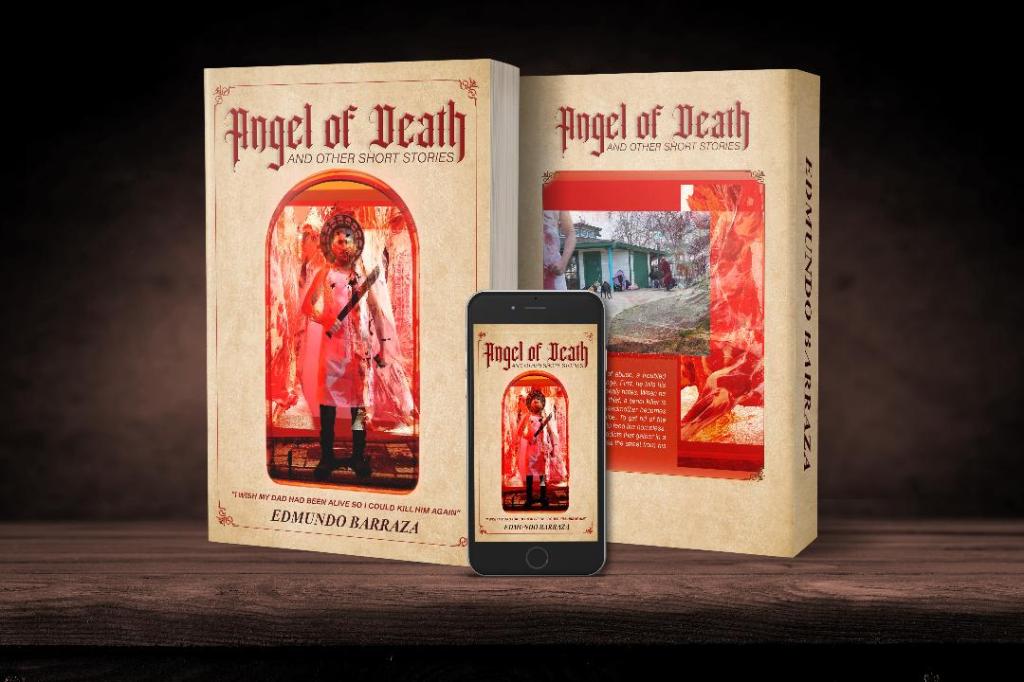
SUMMARY
After many years of abuse, a troubled man gets his revenge. First, he kills his father, whom he deeply hates. When he accidentally kills a thief, a serial killer is born. His loving grandmother becomes an eager accomplice. To get rid of the bodies, he begins to feed the homeless, winos, and drug addicts that gather in a decrepit park across the street from his butcher shop.
SYNOPSIS
This is the story of three generations. The main protagonist is Angel. His father, Ramiro, is a stubborn and antiquated man who suspects his son of being homosexual; his never-ending accusations and humiliations cause long-lasting psychological traumas in Angel’s mind. The mistreatment began in his early teens, and he became a shy person unable to have normal relationships with females his age.
Without a doubt, Angel hates his father.
Angel’s grandfather, Genaro, is an old-fashioned Mexican man who fled the Mexican Revolution in the 1930s. He emigrates to the Central Valley of California, where he buys a small corner store in Visalia. Later, he turns it into a butcher shop. The business begins to grow and has success. He also starts to buy properties around his shop. A loving man. Angel adores him.
But the person Angel loves the most is her grandmother, Sandra. In her old age, Grandma suffers a fall with grave results; she can no longer walk or talk. Doomed to end up in a wheelchair, she can only communicate with a notepad and a pencil. They both learn to protect and console each other. And to cover up their misdeeds. Grandma loves her church, but she’s no saint.
After Angel’s dad dies during what some might call a suspicious mishap, Angel is forced to hire a helper. That young girl awakens new life and feelings in Angel, but a betrayal cuts his happiness short.
One night, Angel finds a thief in the store and confronts him, with dire consequences. It changes his life forever. Not for the best.
The butcher shop is where it all happens.
Chapter I
GRANDPA AND GRANDMA
The prolonged mental abuse my dad inflicted on me created long-lasting scars on my mind. He never abused me physically. But the negative impact of his cruel comments weakened my mind.
My dad was the first person I killed. I never reported him missing or filed a police report. I just said to anyone who asked that he had decided to retire to Mexico and that he was staying there indefinitely. But in reality, I made him disappear.
My grandfather, Genaro, was born in Mexico in 1912 during the Mexican Revolution. In the 1930s, he immigrated to the United States. At first, he worked in Central California. After four years, he saved enough money to buy a small grocery store, which he later converted into a butcher shop. When my grandfather died, my dad kept the shop and bought the house next door.
We connected the butcher shop to the house by building a hallway between the two properties. Our house was behind the butcher shop.
My occupation required being in constant contact with my customers. Butchers, like barbers and taxi drivers, are very communicative. They develop an extroverted personality that they adopt for the rest of their lives. In my case, after I closed the shop, I became quiet, even in my thoughts.
My grandfather was a big man. He had dark brown skin and a heavy mustache. The hard work in the fields and, later, the heavy chores in the butcher shop made him as strong as a bull. When he died, he was eighty years old, and he could still lift a quarter of a cow to a six-foot-high hook. Whenever he comes to my mind, he appears wearing his apron. The only time I saw him wearing a suit was in his coffin.
My grandpa never learned how to speak English. My father did, but he never absorbed the American culture. He always felt he was a hundred percent Mexican. My grandpa never pushed Dad to go further than high school. I had the choice to go to college, but I never considered it seriously. I always thought I would end up in charge of the family business. Some of my Mexican friends said my dad looked like Pancho Villa. His name was Ramiro.
When my dad died, he left me the shop and eleven houses surrounding the shop. The entire block was ours. We lived in one of the houses and rented the rest. I guess we were rich, but I never felt or looked like a rich person. Maybe because we never learned how to spend our money.
My grandma was eighty years old. She had been in a wheelchair for the last few years. She had bad knees, and she lost her ability to speak when she slipped in the kitchen and hit her head on the countertop. Her name was Sandra. She was my only friend.
Her head injury caused damage to the left side of her brain. She developed a rare speech disorder called aphasia. Within days, she became mute. Partial recovery was possible, but it depended on the patient’s age and motivation. None of that was in her favor.
The doctor recommended treatment with a speech therapist, but she only attended a few sessions. She claimed the therapist didn’t speak Spanish properly.
I bought her a wheelchair when the increasing pain in her knees prevented her from doing all the things she used to enjoy. The wheelchair remained unused for months until I stopped begging her to use it. Once she started using it, the pain in her knees went away. She never walked again. She was a quiet person.
Like my grandfather, my grandma never learned to speak English and hated anybody who didn’t speak Spanish, including Americans. She still considered California to be part of Mexico.
One day, before she lost her speech, a brown-skinned boy, obviously of Mexican descent, started talking to her in English, and she told him, “Aprende a hablar en español como tu papá, mocoso!” (Learn how to speak Spanish like your dad, brat!) And she became furious when he responded, “Learn how to speak English, like your grandson, old lady!” I couldn’t help but laugh, but I turned away so Grandma wouldn’t notice.
I began cooking after watching my grandma struggle in the kitchen. She was still able to attend to her needs. Her hygiene had been impeccable throughout her life in every aspect of our lives. Tidiness was high on the list of her virtues. The house and the butcher shop were always clean, too.
We installed wider doors and ramps so she could gain access to every room in the house. She could do anything but cook. After some time, I became a decent cook.
I enjoyed her company, and the fact that she couldn’t verbally criticize me made me feel like I didn’t have so many flaws. I loved our one-way conversations. Her face became very expressive, and I could read every gesture and signal. She wasn’t very devoted or virtuous, but she spent a lot of time in church.
The butcher shop was in front of the Lincoln Oval Park, a small, decrepit park where the homeless and drug addicts spent their leisure time doing nothing. It was the poor side of town where most Mexicans used to live. Having the police station two blocks away wasn’t a deterrent to crime and violence in the area. There were four second-hand stores in the neighborhood, including the Salvation Army.
The place was in Visalia, in Central California. Population: one hundred thousand. The biggest attraction was the Sequoia National Park, thirty minutes east of town. Agriculture and dairy were the primary sources of labor.
The business at the shop was good, considering the bad economy and the high unemployment rate.
My name is Angel.
Chapter II
MY FATHER
My father’s name was Ramiro. He had demons like me. My grandma said I was his replica. If Grandma was right, then I was a total screw-up.
He was always home, but to me, he was always absent. He was a good provider, though. I never knew what hunger was. I always had shoes on my feet, but that was basic stuff. What he lacked was more important than that. It would have been better to be a poor kid with a great dad than a rich kid with a bad dad.
When I killed my father, I was thirty years old. I had endured over a decade of false accusations from him. He accused me of being gay. I repressed my rage and quietly resisted his suspicions and insults. He never knew how badly he wounded my pride with his sarcasm. He would say: “You’d make me happy if you bring a girlfriend, but if you bring a faggot like you, I’ll kill you.”
And the more he accused me of being gay, the harder he made it for me to take the decisive steps to find a girlfriend.
I didn’t understand the reason why he was so homophobic. He acted like a typical Mexican macho man. I wasn’t gay. I was shy and never learned how to behave around women. My dad had just worsened my traumas with years of constant false accusations.
One time, I finally had enough and said, “Dad, I’m not gay; please stop suggesting that I am because I’m not.” he responded, “The day you impregnate a girl, I’ll stop thinking you’re a faggot.”
I even thought I wasn’t trying hard enough to find a girl, just not to give him satisfaction. And the years passed. I had had sex once in a while with prostitutes, but it was never satisfying, as for a long-term relationship with a regular girl, it seemed impossible.
The irony of it all was that my father had not been a Playboy either. He was as shy as I was. Grandpa had to take Dad to Mexico to find him a wife. My dad was fortunate to have found my mom, but I couldn’t say the same for my mom. After dad died, I stopped feeling so miserable.
One day, a friend of mine showed up at the shop. I introduced him to my dad. After my friend finished his shopping, my dad told him, “You should take my son out one of these days and help him find a girlfriend or a boyfriend. I still don’t know what he likes.” In an instant, I felt the heat coming out of my face. It was by far the most embarrassing moment of my life. I dropped my apron and went out through the back door.
That night, I killed my dad.
I went to my room, sat on the bed, and started crying. Then I heard the squeak of a wheelchair. Grandma looked at me with her sad face. Her bright black eyes had two sparkling tears. I just shook my head. She knew my dad was the only person who could make me feel so sad. Without saying a word, Grandma comforted me with a simple hug. But it wasn’t enough.
Before she left the room, she mentioned that she suspected Dad had killed my mom.
For a second, I thought about killing myself, but instead, I decided to kill him. The shop was closed when I came back. Dad was in the walk-in refrigerator. All I had to do was slide the bolt. Through the small glass window on the door, I could see the shock in his eyes.
As if nothing had happened and without any remorse, I went to the kitchen and started cooking dinner. At the table, looking at the empty chair, Grandma questioned his whereabouts. I moved my head sideways and shrugged.
It was past midnight when I went back to check the situation. Seven hours had passed after I locked my dad. Before I opened the refrigerator, I noticed some words written on the fogged-up glass window. At first, I thought it was something written from the inside. When I figured out what it said, I knew somebody had written it from the outside. It said, “ti evresed uoy”.
I saw Dad in the corner, lying down on the floor in the fetal position. He had been cold all his life, but at that moment, he was just frozen dead. The temperature there was -10 degrees F. I could never stay in that room for more than three minutes.
I was a little nervous because I thought he could still be alive. But he was as hard as the rest of the meat in there. I grabbed the meat hook to move his body, but I thought it was disrespectful. Instead, I dragged him out of there by his feet.
First, I sawed off his head with a hand saw because he was too heavy to lift to the bandsaw table, so I dismembered his extremities. His blood was frozen, so I wasn’t too worried about making a whole mess.
For the first time in my life, I wasn’t afraid of hearing back about his sarcastic comments. With unrelated sentences and with short intervals in between, I began: “I told you a thousand times that I wasn’t gay.” Then, I made the first cut in between his ribs, from the neck to the stomach.
“Grandma was right. You deserve it.” Then, I removed his intestines.
“You’ll never meet your grandchildren.” Then, I removed his cold heart.
“You won’t be so cold in hell.” Then, I cut off his penis.
“Even your mother hated you.” Then, I turned him over.
“You won’t be calling me all those ugly epithets with your filthy mouth, like faggot, gay,
homo, homosexual,” then, I sliced his buttocks.
“I saw you killing grandpa, you cold-hearted bastard!”
Then, I grabbed his decapitated head by the hair and put it in front of my face.
“Did you kill my mom, mother fucker? Did you kill her? Answer me, you piece of shit!”
I had to use all the equipment in the shop, three different knives, a cleaver, a skinner, and a cimeter. Also, the handsaw, the table saw, and the meat grinder. I sawed all the bones to three inches or less, even his cranium. Nobody would recognize those bones as human bones. Intestines and organs went straight to the trash, including his sexual organ; ugh! I put it all in a tightly sealed, double-heavy-duty plastic bag and, in a separate bag, all the bones. Hands and feet had to be cut into tiny pieces and then put into the grinder.
Out of two hundred and fifty pounds, I could get only sixty pounds of ground meat. On Saturday morning, the homeless, winos, and drug addicts had free hamburgers. Dad was finally giving back to the community for years of loyal support.
I ended up with a big mess after all. I was glad Dad had installed tile on all the walls and floors, with stainless-steel equipment, a commercial water pressure washer, and plenty of drains. When I finished, the place looked shiny new again. The shop was free of bacteria and parasites. My dad was finally gone. Hallelujah!
Mexicans had a few exclusive advantages. For instance, we could kill another Mexican, and if somebody asked for him, we could answer: “He went back to Mexico indefinitely.”
The next day, I opened the “Carnicería Jalisco” or “Jalisco Meat Market” for the first time as a sole proprietor.
Chapter III
HAVE YOU SEEN LOLITA?
One of the few distractions grandma had was going to church. One day, I found out the reason priests adored her, especially Father Fidel. After taking communion, she gave him an envelope. Father Fidel volunteered to push her, even though the chair was battery-operated.
They appeared to be good friends, and Grandma seemed to enjoy his company. I knew then Father Fidel absolved her sins in advance, given the significant amount of her donations.
Grandma collected more than ten thousand dollars a month from the eleven houses we owned. I handled everything related to the butcher shop, while she oversaw all our properties.
After my grandfather bought the little grocery store, he turned it into a butcher shop. Later, he bought the house next door. When grandpa died, my father bought all the houses in the entire block. Every time they put up a home for sale, he would buy it immediately. He would pay the whole amount in cash.
Ana Suarez owned the only house on the block that wasn’t ours. I heard rumors that she had an affair with my grandfather a long time ago. Grandma hated that old lady with all her heart. The fact that we didn’t own that house had been a matter of great obsession for Grandma. It bothered me a little bit, too.
A single mother and her teenage daughter rented another house. One day, that lady asked me if I could give her daughter a job. Since my dad had ‘gone back to Mexico’, work had been overwhelming, so I gave her a job. Her name was Leticia.
The store seemed out of place in that deteriorated neighborhood. The exterior paint in the building was still fresh. The asphalt in the parking lot was still black. It had security cameras, and we had a contract with an exterminating company. During business hours, I felt safe with all my knives and hatchets.
When I was a kid, my grandfather gave me a beautiful machete. He told me he used it in the jungles of Veracruz when he was a teenager. I kept it under my bed at all times. I thought I would never use it until one night when I heard a noise in the store. I grabbed the machete and went to check, quiet as a cat. The back door was open. I found a guy trying to open the cash register.
The store was never completely dark, even with the lights off, because the refrigerators had their own lights. When the thief saw me, the expression on his face scared me too. He knew he was trapped. To escape, he had to pass by me. When he attacked me, my machete was already halfway between us. He tried to stop the blow with his left hand.
His hand and head went flying in different directions.
His beheaded body was spraying blood from the neck. His torso jerked on the floor for a few seconds. His head kept rolling until it landed on the back wall facing me with his arched eyebrows and wide-open eyes. I was sure he was trying to say, “What the hell?”
After hearing an unmistakable squeaking sound, Grandma appeared at the back door. She moved her head slowly, examining the scene. “I caught a thief trying to rob us. He attacked me, and I killed him. Should I call the police?” I asked, “No, they cause too much trouble.” She wrote in her notebook and went back to the house. After being around a butcher shop for forty years and seeing so much blood, it wasn’t so shocking to her anymore.
As I began to dismember his body, my dad came to mind. I realized I didn’t miss him at all. On the contrary, I learned to appreciate my new freedom. I could breathe easier.
The thief looked familiar; I’d seen him a few times in the park. He was in his twenties. Sometimes, he was with the group of winos, other times with the drug addicts, and other times with the gang members. He had several tattoos on his body. Nobody will miss him, I thought.
According to my calculations, the homeless in the park would have to settle for half as many hamburgers as last time.
*****
One day, my new helper, Leticia, asked me if I’d seen the movie “Lolita.” With that question, she gave me a clear opinion about herself. She wasn’t interested in boys her age. The book by Vladimir Nabokov was about a nymphet, or sexually precocious young girl. I have seen both film versions.
When I was Leticia’s age, I dreaded girls like Lolita. I felt intimidated by them. Girls like her were, in part, the reason I was traumatized. Girls like her forced me to run and hide in the dark corners of my room. I enjoyed watching them from afar, but I never went near them.
I was sure a psychiatrist would find dozens of traumas in the dark alleys of my brain that profoundly affected my mind. In my teenage years, I went through many embarrassing moments that turned me into a pathetic, shy person. I knew I was sanely insane or insane on the inside or something like that.
I was fascinated by that movie, by the boldness of the male character, and by Lolita’s seductive audacity. Girls like her were my greatest fear. And the male protagonist was the role model I could never be. Both of them were partly guilty of their actions, but I couldn’t blame only one side.
Leticia was attractive. Nothing specific stood out. Except for her breasts and her spunky, extroverted personality, she said she enjoyed that movie a lot. She said she felt attracted to older men. But not too old like the main character in the film, but like me, she said.
I was glad my back was facing her because my entire face was burning red.
“Yes, Leticia, I’ve seen that movie; why do you ask? Are you comparing yourself to her?”
I was seventeen years older than her. I was supposed to be a mature person, but I knew I wasn’t. My life had been a long procession of humiliation. Unnoticed by most people because I always walked away. At that moment, I was the adult in the room; I was the owner of the establishment and the boss, but I knew that a false reaction could send me running to my room.
“No, I’m just making conversation,” and then she added, “Why don’t you have a girlfriend, boss?”
Shit! I just blushed in front of her. Damn it! I was losing ground. I’d better come up with something bold, I thought.
“Listen, Leticia, I never discuss my intimate life with anybody. But I know that when I find a girlfriend, she won’t be from this neighborhood.”
“Are we all low-lifers in this neighborhood for you, boss?”
“No, Leticia, don’t get me wrong, I didn’t mean it like that. What I meant was that there are no cute girls in the neighborhood. Well, except for you, but you’re too young.”
“Okay, boss. Whatever you say. I know you’re right about the neighborhood. They’re a bunch of losers; I wouldn’t date any of them. Besides, there are no cute boys around here, well, except for you, but you’re too old.”
With her proximity and her cheerful nature, she might be able to lessen my stupid shyness. With her around, I had to confront my fears daily. Make them part of my regular life, get used to them, and who knows, maybe I would even conquer my fears once and for all.
Chapter IV
LIKE FATHER LIKE SON
My father and my grandfather used to get along fine. Their personalities were similar. They respected each other, but they were very old-fashioned and cold. But they weren’t always like that.
When I was a kid, they used to be playful. We used to go to the ocean and amusement parks, and we went fishing and camping. We were a regular family. When I turned eleven or twelve, Dad and Grandpa began to change. The transition was confusing to me. So, I stayed in the lonely comforts of my mind, becoming withdrawn and shy.
They began to treat me like an adult. After doing my homework, they would take turns teaching me how to be a butcher.
Another change came when grandpa told dad about his retirement plans. My grandfather was eighty years old.
“I’m tired, son; I’ve been thinking about selling the place and retiring to Mexico; I’ve lasted as long as I could. I should have retired ten years ago, but they say that you die two years after retirement, so I cheated death for at least eight years already. Your mom and I are going back to Mexico.”
“But dad, you can’t do that; you can’t sell the shop. What are we going to do?” he asked with a preoccupied look on his face.
“I’ll leave you some money so you can start your own business, or you can get a job at the big new supermarket. They need a lot of butchers. Or better yet, you and Angel can come with us. We’re buying a small ranch in Jalisco. You are welcome to stay with us.”
“But Dad, I’ve worked all my life for you. I’m forty-four years old. How can I start working for somebody else, and how can I follow you to your retirement ranch? That makes no sense.”
“Listen, son. I can say the same thing. I’ve worked all my life for you. What am I supposed to do, retire to nothing, with nothing? You can always sell your house or save some money, as I did when I was 20. We don’t need to fight over this. The decision is final. We don’t need to discuss it any longer.”
A couple of weeks later, grandpa was dead.
At my dad’s suggestion, we went fishing in the Sequoia Mountains. The three generations are making our last trip together. My grandfather, Genaro, was eighty years old, and my father, Ramiro, was forty-four. I was fourteen years old.
Our favorite spot to fish was a narrow wooden bridge above a beautiful creek.
From the unpaved parking place, we still had to walk uphill for half an hour. We were on the bridge, preparing our rods and bait for a full day of fishing. After a few minutes, Dad said he had forgotten the lunch box and asked me to fetch it from behind the truck.
On my way back, through a clearing in the woods, I could see the bridge. As I hiked a little higher, I could see them at the rocky bottom of the stream. I could barely see Dad lifting a rock above his head and hitting my grandpa with it. I couldn’t believe my eyes! Was it real? It was like watching a silent movie, just movements.
I rubbed my eyes, and when I opened them again, I saw the same image; Dad was killing Grandpa. I ran to save grandpa, but I was too far away. Then, I thought if I intervened, Dad would have to kill me, too.
After all, grandpa retired to Mexico, but in a coffin and without grandma. He always said he wanted to end up in a Mexican cemetery. We fulfilled his wish and went to bury him there.
Dad turned colder and meaner after that day. I never told him that I saw him killing Grandpa. It would have been useless. If I had reported the crime, they would have taken Dad to prison. I was afraid. I never said anything to Grandma either.
My dad told the police that Grandpa slipped on the bridge and fell. They believed his entire story. The following day, Dad opened the store as a sole proprietor.
Chapter V
STAIRWAY TO HELL
Leticia dressed in a very suggestive manner, or maybe everything about her looked suggestive. If I sent her to the walk-in refrigerator for a piece of meat, she would come out with her erect nipples. If she wore a short skirt, she would show her underwear left and right. She had no modesty at all. Tight jeans, tight t-shirts, or blouses, everything looked provocative on her. It was a little distracting in a good kind of way.
She brought new life to the place and my life. She handled her job with efficiency. Most of the customers already knew her. But I found it a little inconvenient walking around with a hard-on all day.
Her light brown skin looked soft and fresh, even a little shiny. She had short brown hair. Her long legs were beautiful, but her breasts were the main attraction. When she smiled, a dimple formed on her left cheek. At first, she seemed average-looking to me, but over time, she appeared prettier each day. After three weeks, she still didn’t call me by my name.
Her dad was deported back to Mexico three years before after three DUI infractions in one year. Her mom was a cashier at the Salvation Army second-hand store.
After closing time, we stayed for an extra hour to clean and organize everything for the next day.
“Hey, Boss, seriously, why don’t you have a girlfriend? You’re kind of cute.”
I’d been adapting to her flirty nature. I hardly blush anymore. I felt comfortable enough around her. I seldom felt intimidated by her candor and extroversion. She was a little immature, but I thought her personality was natural and innocent. Everything she did, even wrong, seemed unintentional.
“I don’t know, Leticia; people can’t believe I never had a girlfriend in my life. They must think I’m gay. The fact is that I’ve been shy all my life. The only time I asked a girl out, a million years ago, she turned me down. I never asked any other girls again. I felt deeply embarrassed and hurt. The humiliation was so huge I didn’t come out of my room for a whole week.”
My dad came to my mind right away. I hadn’t realized how obvious it must have been for him to think I was gay.
“I think that’s cute, boss; I’ve never met a guy as shy as you in my life. Most guys I know are pushy, and they can’t take no for an answer. I wish I were the girl who said no to you. I would have said yes and stayed the whole week in the room with you.”
“That’s nice, Leticia, but when that happened, you were probably in your mom’s womb.”
*****
My dad offered $130,000 to Ana Suarez for her house, but she refused. She was a retired teacher. Her estranged daughter lived in Arizona. After they discovered the affair between my dad and Ana Suarez, her husband left her. A few months later, her daughter moved away too. She has lived by herself since then. I’ve never seen her at the shop. She was either a vegetarian or bought her meat elsewhere.
I made another offer for her house for $160,000. She turned it down, too. She said she would burn the house down rather than please grandma. She said she lost her husband and her daughter, but she would never lose her house. She also said grandma didn’t know how to make a man happy, so he looked somewhere else.
What a sad old lady. Still embittered by events that happened years ago. But I bet Grandma felt the same way. I wanted to surprise Grandma, but instead, I gave her the bad news and told her everything Mrs. Suarez said.
My grandma was enraged. She carried a notepad with her at all times to write messages. She wrote that she would be happy when that old bitch died. And that if she were younger, she would gladly kill her.
That gave me an idea. Ana Suarez’s house was adjacent to the back of our home. Throughout the years, there have been a few disputes or incidents involving Mrs. Suarez and Grandma. One day, a dead rat appeared in our backyard. My grandma suspected that Mrs. Suarez had thrown it over the wooden fence, so she threw it back. The next day, it showed up in our yard again. It went back and forth for a whole week until I put it in the trash.
On another occasion, a branch from one of our old trees fell on her patio. The following day, that branch and other branches that were not part of our tree appeared in our backyard. And then, she demanded that we fix the fence.
Sometimes, I would hear the two old ladies grumble at each other, exchanging unintelligible insults over the fence as they tended their yards. Their anger and bitterness, instead of disappearing with time, kept increasing with their infantile behavior.
One day, I removed three wooden boards from the fence and left them loosely hanging against it so that when the opportunity came, I could remove them quickly. I planned to kidnap Ana Suarez from her backyard as she put her clothes on the clothesline or while tending to her tomato plants. I could grab her from behind and drag her to the shop.
When I told Grandma about my plans, she nodded and smiled morbidly. Grandma knew about my dad and the thief, which made her an accomplice to my crimes, but I didn’t know she could be so evil.
Days later, I found the perfect opportunity. As Mrs. Suarez was hanging her clothes near the fence, I grabbed her from behind. I bet she almost had a heart attack. I covered her mouth and lifted her body. She was light as a feather but kept kicking like a mule. Grandma watched with a diabolical smile as she followed us in her squeaky wheelchair.
In the shop, I covered her mouth with duct tape and tied her up to a chair. My grandma was in front of her with a wicked smile on her face. I bet Grandma wished we could keep her like that forever.
I used a rope to tie her ponytail and the other end to the ceiling light. I wanted the back of her neck to be accessible for the next part of my plan. Then, I moved Grandma aside and grabbed my sharp machete. In an instant, the head of Ana Suarez ended up swinging like a piñata in the middle of our shop. Grandma didn’t waste a second and hurried to steady her head and said to her head: “P U T A,” with a hideous, sneering smile.
My grandma was not only my accomplice but also my willing partner. The following Saturday, my homeless friends had hamburgers again. I didn’t receive any compliments on that occasion. One of them even dared to complain, “It tastes like old meat, but thanks anyway.”
A few weeks later, Mrs. Suarez’s daughter showed up after someone reported her mom’s disappearance. Afterward, she put the house for sale. I offered her 120,000 dollars, and she accepted.
Chapter VI
BLOOD IN THE FAMILY
I’ve felt abnormally normal. I knew that was the result of two recent events: the disappearance of my father and the appearance of Leticia. It was a satisfying and therapeutic pause to my prolonged mental suffering.
Even though three people have died at my hands, I needed to clarify that I didn’t kill my dad. He died. I provoked his death. He was already dead when I cut him up. The murder of the thief wasn’t my fault at all. The murder of Ana Suarez had been Grandma’s wish, so, in that case, we needed to share the blame 50/50.
My perverse thoughts were satisfied temporarily. The usual evil desire to kill people had faded a little bit, the desire to push people to incoming traffic. Or to stab them in their backs had decreased.
Since I was young, I had imagined how easy it would be to kill anyone. That feeling gave me an imaginary power. But I was sure it was all because I was envious of seeing other people happy.
For years, I had the same recurring dream. I was seven years old when a girl, maybe one year older than me, kept chasing me. She wanted to kiss me, but I was afraid and confused. I needed to get away from her and crawl under my bed, but she reached her goal and kissed me. After she went away, I stayed there until dark.
Since then, I’ve had the same dream my whole life. Since then, I have felt secure in the shadows, where I am anonymous, and nobody pays attention to me.
*****
I had a beautiful vision one day after closing the store while working at the cash register. I turned my head, and I saw Leticia standing on a stool, cleaning the top of the refrigerator. She was wearing a short skirt, and I could see the entire magnitude of her beautiful, long legs. She had a tiny pair of white underwear that didn’t cover the lower part of her butt cheeks.
She caught me watching her, but she didn’t cover herself. Instead, she smiled provocatively. I didn’t blush, which was in itself a miracle. I thought my traumas had disappeared.
But I still didn’t know how to handle the situation; I didn’t know how to approach her, and I wanted to have her. I knew she was tempting me. She was a snake offering an apple.
My desire for her had turned abnormal; I had to have her. The desire was so overpowering that I didn’t consider that if she refused me, I was going to run and hide under my bed. I didn’t know how to initiate a romantic relationship; my intentions were purely sexual. But rape should be out of the question. Unless . . .
I grabbed her by the waist and brought her down. I ripped her panties, spat on my hand, and rubbed her clitoris for two seconds. Then, I penetrated her. I covered her mouth with my hand, just in case. After I noticed how excited she was, I removed my hand from her mouth.
I was horny as hell, and so was she. I never had to force her. It appeared that the ‘brutal rape’ had turned into a fantasy for her. She was now taking the lead. She was more experienced than I was. I felt a little disappointed, but I kept satisfying my prolonged sexual abstinence.
Then, she interrupted my thoughts and said, “You don’t have to worry; I’m on the pill.” The enchantment turned into deception. My Lolita fantasy faded away in a second.
We still had sex two more times.
During our heated sexual encounter, I thought I heard Grandma’s wheelchair. Later, as I prepared dinner, Grandma wrote on her notepad, “I knew your dad was wrong,” as she handed me the note. I noticed an approving smile on her face.
Love had always been a distant foreign affair for me. Even friendship and affection were unknown to me. Leticia was altering emotions I didn’t know I had. I was getting a chance to experience a regular life.
I had lost an entire decade of my life, most of my twenties. I didn’t know where all those years went. I wished I had met Leticia a dozen years earlier.
One night, she convinced me to go to the movies with her. She was sixteen, but she looked older. I was 33, but I looked younger. That was my first date. How absurd was that? I wasn’t breaking the law by going out with her, but if they found out I was having sex with her, they’d put me in jail for sure.
I felt strange having to ask her mom for permission to go to the movies after having sex for over two months. The following week, she asked me out again.
We went to see a new band. The place was loud and crowded. I was having a decent time until Leticia went to the restroom. Then, I saw her talking to a guy, probably four or five years older than her. I didn’t see her again until the next day at the shop.
In the morning, she appeared with a couple of hickeys on her neck. I always thought that to be the lowest of all vulgarities. I had a hunch that guys like me couldn’t be so lucky for a long time.
After a brief discussion in my head, I decided what her fate would be.
That morning, when I greeted her, she said, “I’m pregnant, and I’m sure it’s yours. I lied to you when I said I was on the pill. You’re the only one that I allow to have sex with me without wearing a condom,” she added, “I’m telling you this because I don’t want to hear any sermons. Last night I took off with an old boyfriend of mine. I don’t need to give any explanations. After all, we’re not in a relationship or anything.”
I just shrugged and said, “It’s alright, never mind about last night. But if you’re pregnant, what are you planning to do with the baby?”
“You can marry me, and we can have the child, or you can fire me and never see the child,” she said.
Her sudden, illogical arguments had my head spinning.
“What a drastic change, Leticia. I don’t understand why you’re acting this way. I know there’s no love between us, but I thought that we were at least friends. I don’t want to be a father, I’m not ready for that, and I don’t think you’re ready to get married or to have a child, either. You can do whatever you want with your life and with your child. Whatever this thing was, it is over.”
“What do you mean by that?” she replied, “Are you erasing me from your life, are you? Forgive me. I didn’t know what I was doing. I wanted to defend myself before you started to attack me. I know I shouldn’t have gone with anybody else and left you there. I apologize for that,” and then she added, “When they deported my dad, I was thirteen years old. Since then, I’ve been doing whatever I pleased with my life. I’ve never been a nice girl, but I was trying hard to be one for you. I know you didn’t do anything wrong. Please forgive me.” She sounded regretful, but I doubted her sincerity.
“All right, forget the whole thing. We need to open the store.” With that sentence, she probably thought everything was back to normal.
The rest of the day, my pseudo-nymphet had what appeared to be a regular day. The minute we closed, Leticia was out of her clothes and going down on me. I was fighting my excitement. I couldn’t help but think she was doing the same thing to another guy the night before. And that the same guy had been biting her neck like a vulgar vampire. I almost refused her, but by then, I was enjoying it too much.
Just when I thought I was finally regenerated, just when I thought my salvation had arrived, she betrayed me.
I almost felt bad about what I was about to do. My mind was struggling.
I was inside her, but my mind was somewhere else. I felt a rush of rage invading my body. I was raping her. That was my intention, but it bothered me that she was on the brink of another orgasm. I grabbed her by the neck and started squeezing it with all my strength, and the harder I tightened my grip, the harder I continued to bump her.
I guess that wasn’t a terrible way to die, having an orgasm during her last breath. Perhaps she thought it was a joke or just a temporary punishment.
When I killed my dad, I didn’t see his eyes at the precise instant when he died. But when Leticia died, I saw her soul leaving her body. I saw terror and pain in her eyes.
The following day, Leticia’s mom came to the store looking for her because Leticia hadn’t spent the night at home. I told her she didn’t show up to work either and that she had asked me for eight hundred dollars in advance the day before. I told her that Leticia had mentioned her plans to go to Las Vegas or Hollywood to seek fame and fortune. Her mom said she had heard about that, too, and then she lowered her shoulders in defeat and went away.
On Saturday, three people in the park mentioned how good the hamburgers were. I didn’t taste them, but I saved two portions of meat for Grandma and me.
Grandma had excellent table manners. She was always boasting about her European ancestry and the superiority of French cuisine. That night, I used a fancy French recipe. The main ingredient was lamb. But instead, I used Leticia’s breasts, one for grandma and one for me.
The plate looked impressive. The breasts looked proud and pompous. My grandma knew Leticia had been missing for two days, but never inquired about her. When I served her plate, she immediately asked, “Leticia?” as she pointed to the plate. I assented, and she handled the utensils with delicacy and finesse. She even looked a little comical.
After she finished, she wrote on her pad: “Too bad they only come with two of them.”
Chapter VII
MY FATHER CREATED A MONSTER
I missed Leticia right away. Her high-spirited personality, her lively behavior, but most of all, having sex with her. The butcher shop felt tedious again. Besides, I had lost an excellent helper. I knew finding a better replacement wouldn’t be easy.
I put a ‘help wanted’ sign on the window. Two people applied, but I didn’t like them. I felt terrible when I turned them down, so I gave them fifty dollars for applying. The next day, three more people showed up, but I turned them down, too. Since it was getting a little too expensive, I removed the sign. I knew, deep down, that I was looking for Leticia’s replica.
As I drove aimlessly through town on a Sunday afternoon, I pulled over to pick up a hitchhiker. She was in her early twenties. She looked too clean, decent, and attractive to be a prostitute, but I knew decent girls don’t ask for rides.
“Where are you going?” I asked her as she got in the car.
“Nowhere, in particular; I’m just killing time. I’m just staying in town for a couple of days. I need to make some money to continue my trip. If I find a job, I might stay for a couple of weeks. How about you? Where are you going?”
“I was heading for the movies, but I wasn’t too enthusiastic about it,” I replied.
“Well, if you’re looking for some fun, we can look together. Do you want to go somewhere?”
I’d found out that hookers are easy to talk to. They didn’t intimidate me at all. Most of them were friendly because they had to pretend they were attracted to you.
“Yeah, there’s a secluded park by the river at the edge of town. Do you want to join me?”
After having sex with Leticia so often, I didn’t know how I managed to be without it for so long before I met her. I parked the car at the far end of the park where few people could see us. She said she was from Oregon. Her objective was to reach L.A. to try her luck at acting.
She’d been alternating the Greyhound bus and hitchhiking, depending on her luck. She said someone abused her back home. Parents and grown-ups abuse kids in so many different ways. No wonder there are so many unhappy adults in the world, misfits, psychos, and serial killers.
After a while, she went straight to the point and gave me the rates. I paid her in advance. I’ve never been a big spender, but I always carried two or three hundred dollars with me. It was getting dark.
After she showed me the entire cosmos, stars, and comets for three minutes, I managed to remove her blouse and bra. I wanted to compare her breasts with Leticia’s. Leticia won by a small margin. After we finished, I invited her for a beer.
As I was putting on my pants, I noticed the rest of my money was missing. When I confronted her, she said she didn’t take it. I checked her pants, shoes, and even her underwear, and while doing it, I got excited again and offered her another hundred dollars for sex if she’d give me my money back. When she declined, I pushed her out of the car. She didn’t have any clothes on.
I drove away, and I could see her getting smaller in my rearview mirror. But I felt terrible, so I returned and opened the door to let her back in. Then, she gave me my money back.
“I’m sorry; thanks for coming back. You know, sometimes I meet really bad guys who abuse my vulnerability. I’ve been beaten and robbed, so I have to balance it out. I’m not a hooker. I’ve always enjoyed sex, but I figured, why not get paid while doing it, right? Is the beer offer still valid? What’s your name?”
“Angel,” I replied.
She had a room in a cheap motel. We had sex and talked for hours; she seemed as lonely as I was, but I knew her loneliness was only temporary. We got drunk, and I returned home a little before midnight.
I offered her a job, and she accepted it. I knew I could regret it. I could still back out and blame it on the alcohol. In the morning, I asked for her driver’s license. I told her I was keeping it until she could earn my trust.
“Okay, we got off on the wrong foot. If you stay, you’ll find out I’m not a bad person. Respect me and my property, and we’ll get along just fine. My former employee didn’t follow these rules, and I fired her. Behave properly, and I’ll reward you accordingly, I swear.”
“Don’t you think you’re a little dramatic? After all, it’s just a temporary cashier’s job.” She said.
“Yeah, you’re right, but I don’t want you to end up like the other girl.”
*****
One night, Grandma found a letter under the mattress in what used to be my mom’s bedroom. I had many painful nights in my life, but that night was the worst by far. It broke my heart.
To whom it may concern:
“I’m afraid for my life. If I’m dead while you’re reading this letter, let the police know that I only suspected my husband. If I disappear or end up buried in the desert, my husband should be the only one to blame. I love him, but he thinks I had an affair with my cousin Isidro while he stayed with us for a few weeks. I’ve always been very close to my cousin. We grew up together and have been good friends all our lives. I only love him like a brother, but Ramiro is too stubborn and irrational to understand that.
I think he might kill me. Nobody would believe me if I accused him without any proof. I’ve lived in constant fear for the last few days; I’m afraid of what he might do next. He was a complete maniac when he found out that my cousin gave me a crucifix, and he ripped it off my neck. I can’t control my suffering any longer.
When I lie in bed with Ramiro, he refuses to touch me. The last time we had sex, he suddenly stopped and asked me if my cousin was better than him.
I wish to die instead of continuing this way. It’s truly unbearable. I finally suggested to him that it might be better if I went back to Mexico. He became furious and said that all I wanted was to return to my cousin. I thought about leaving him without saying a word and taking my son with me, but I’m sure he would find us and kill us both. I keep praying, but it’s no use.
Whatever happens, let my husband know that infidelity is a horrible word that never crossed my mind.”
Luisa Martinez Junco Visalia, CA 09-25-1984
I wish my dad had been alive so I could kill him again. My dad always said that my mom abandoned us. And that she went back to Mexico to join a former lover.
When she wrote this letter, I was six years old. My dad killed his father and his wife. How could anybody be such a monster?
Chapter VIII
ASCENDING PSYCHO
Her name was Joy. She was twenty years old. She had been waiting a long time to move away from home. Her plan was to get established in L.A. and later return for her sixteen-year-old sister because she didn’t want her to live the same kind of miserable life she had.
We made an oral agreement. She promised to stay for at least three months. After that, we could make new arrangements.
I offered her a small house to stay in, and she accepted. She seemed to be smarter than Leticia. She had short reddish-brown hair, clear brown eyes, and was very attractive. It took her just a short week to learn how to handle the job with expertise.
On her first weekend in town, I invited her out for a beer. We ended up in a gay bar. She appeared to be comfortable around gay people. She was very friendly with everybody.
After a few beers, she asked me to dance.
“I’m not drunk enough,” I said.
Her company was pleasant. She hadn’t noticed yet how shy I was.
“I’ve never danced in public in my whole life. I’m sure I don’t know how to dance, but if I’m drunk, I might give it a try.” I said.
We never found out if I could dance because we got drunk and forgot about dancing. We returned home around midnight, and we had sex.
She said one of his dad’s friends raped her when she was sixteen and that her dad stabbed him in the back. They sentenced her dad to five years in prison, but he served only two. Her mom left them while he was in jail. She was afraid something like that could happen to her younger sister, too.
*****
So far, the murders I’ve committed have been hate crimes. I hated insults and denigration (Dad), I hated getting robbed (thief), and I hated betrayal (Leticia). I’ve been around blood, meat, and bones all my life, but my emotions never got involved in that. When I first came in contact with human blood, I noticed it could be addictive.
Being in control gave me power, and with that power, shyness disappeared.
The perfect crime is perfect until it gets discovered. If you kill someone and nobody finds out, it could become an obsession to kill again. And I guess if it’s so easy, it’s hard to stop. And if you add a disposal place, like a butcher shop, to get rid of the bodies, it becomes a lot easier.
Joy adapted quickly to the city. We went back to the gay bar.
“I like this little town. I love my new freedom too.” She said.
“It must be hard for a woman to be on the road all by herself, right?”
“Oh, yeah, there are a lot of psychos in California, but not you; you’re a sweet guy. I can’t even imagine you killing an ant.”
“I hope you never find out what I’m capable of, but thanks for your honest opinion.”
“I must tell you again that I’m not a hooker. I never accepted doing it with old men, only good-looking guys like you. I don’t think I’ll do it again. By the way, I wanted to thank you for your hospitality and your friendship. I needed a break from the instability and dangers of the road.”
“Well, you’ve been helpful. At first, the customers felt a little intimidated by you because you don’t speak Spanish, but now, they like you because you’re trying to learn. And they think it’s funny.”
“I can’t believe so many people in America don’t speak English. But I like Spanish people, the food, the music, and also the culture.”
“But we’re not Spanish; we’re Mexicans.”
“You know what I mean, Latinos, Hispanics, Mexicans. All I’m trying to say is people who speak Spanish.”
I should have started drinking alcohol when I was younger. It made me feel less inhibited. Had I noticed it fifteen years ago, I’d be a happy alcoholic instead of the recluse, introverted asshole that I am now.
Some guys were playing pool in the back. Half the people were in their underwear, and the bartender was too. Joy found out that every Friday night, they had a different theme. That day was ‘undies night.’
She dared me to remove my pants.
“I’m not drunk enough,”
“It seems that you’re never drunk enough. Come on, let’s play in our panties.”
“Hey, I’m not wearing panties,” I said.
“Ha, you know what I mean.”
I wasn’t brave enough to take communion at church, but there I was, shooting pool in my briefs, surrounded by gay people, and it felt great. If Dad could see me, he’d kill me for sure.
A guy kept sending us drinks; I didn’t know if he was after Joy or me. I couldn’t tell if he was gay or not, either. When he finally approached us, instead of shaking my hand, he grabbed my balls.
His name was Alfred. He said we could call him Al or Fred, but I decided to call him Fredo. He looked a little like Fredo from the movie The Godfather. He was after my bones, after all.
Watching two guys kiss could make me cringe, two girls not so much, but I knew I could never have sex with another man, not even if I was drunk.
After a while, Fredo invited us to his house, and Joy declined. She said she was too drunk. I called for a taxi to take her home, but I stayed. Fredo probably thought I was going to have sex with him, but I had other plans. Instead of going to his place, I took him to the butcher shop.
If he could see the future, he’d feel safer in hell.
As soon as we got into the shop, I put my apron on and started sharpening my machete.
“You’ll be my slave for the rest of the night,” I said.
“Ooh, I like it. You’re so cool. I’ll let you do whatever you want with me,” he replied.
I told him to sit on a stool. I covered his eyes with his tie, put a rag in his mouth, and covered it with duct tape. He was still giggling. Then I tied his hands with an electrical cord and placed them on a butcher block. Then, I grabbed my reliable machete, and with savage force, I cut off both hands.
He didn’t react for a second. He probably had the sensation of still having his hands attached to his arms. He was trying to remove the tie from his eyes and the duct tape from his mouth. But all he was doing was rubbing his bloody stumps all over his face.
He screamed at the top of his lungs, but with his mouth gagged, it was all in vain. He started jumping like a chicken without its head. It was a surreal, bloody sight.
His actions were a total sign of impotent desperation. He began to run until he crashed into the wall and bounced back. Then, with a powerful blow, he didn’t have a head anymore.
Fred, Alfred, or Fredo didn’t exist anymore. Our lives mingled for only a few hours, and now, he was gone. Satan sent him my way for sure. It had to be Satan; God doesn’t do that, I guess.
Fredo didn’t do anything wrong. He was probably a good person. He could say life wasn’t fair. I could say that too.
My homeless friends were happy again. Some of them had started to call me Don Angel. They formed a long line to get their hamburgers. I saved two portions of meat for Grandma and me.
The following night, I prepared another exquisite dish for Grandma. Chosen from her French recipe book.
While cooking, I thought the dish presentation could be a little gross, but I was about to test Grandma’s limits. I stuffed a small zucchini inside Fredo’s penis and two peaches inside his balls. On my plate, I put several thin slices of fillet taken from his buttocks.
I put it in the oven at 350° for ninety minutes, then surrounded the plate with steamed vegetables, added grapes and tiny squares of apples and pears, and sprinkled all with cinnamon and a few drops of honey.
I served the plate to my impatient grandma. With an astonished look, she jerked her body an inch backward as if she had the hiccups. After a brief instant, with a subtle smile, she took my plate and passed me hers. Then, she started eating with singular elegance and excellent manners.
Grandma wasn’t so twisted after all.
I didn’t touch the plate. Instead, I grabbed some cereal and milk and kept looking at the grotesque organ. I thought maybe even Fredo’s boyfriend wouldn’t have eaten it, either.
Chapter IX
A GLIMPSE OF PARADISE
Joy’s sister was seventeen when she arrived in town. She had reddish-brown hair, and she was even more beautiful than Joy. She reminded me of Leticia. She was very friendly and effusive, and she seemed genuinely pleased to meet me.
Sadie was full of joy. Joy was a more proper name for her. Joy and I decided to let her work with us. I didn’t know what to expect with the new situation. I might turn Joy loose and try my luck with my new ‘Lolita.’
Two weeks later, she was enjoying Mexican folklore. We heard Mexican music all day; I figured she’d be singing mariachi songs soon. Joy warned me to stay away from her. I didn’t know if that could be possible. It was up to Sadie.
If Joy thought I could break Sadie’s heart, she was wrong. It had always been the opposite.
I wondered if my thirst to kill had been satisfied. Nobody was tormenting me anymore.
*****
I got a ticket for driving drunk. I deserved it. The judge suspended my driver’s license for six months, and I had to attend A.A. meetings for the same period. Alcohol had been my best friend for the last few months. Since Joy and I started going out to bars, I’ve felt much less inhibited or introverted. Alcohol helped me get rid of my insecurities, at least temporarily. Most people in the group hadn’t touched alcohol in years, and still, they kept coming. Some of them went to the podium and openly told stories about their lives. The Court sent most of them for alcohol, drug, or traffic violations. I hardly saw any wealthy people in those places. It appeared that rich people don’t commit those kinds of infractions.
Most of them were male, and half of them had tattoos. Many of them looked like hippies or Vietnam veterans. I didn’t belong there. I felt out of place. But probably most of them felt the same way.
I didn’t miss driving my car at all. When I was a teenager, I preferred walking to riding the bus. Besides, Joy could be my driver, and Sadie was taking driving lessons.
After one of the meetings, while walking back home, I began to think about finding a rich person to kill, a wealthy female lawyer, or a successful doctor. Then, I wondered if there were any stupid doctors. I also wondered how it felt to kill a person with power. But I’ve never seen anyone who fit that description in this part of town.
My last victim was Fredo, and since then, things have been tedious. I see everyone on the streets as a potential victim, the Mexican selling corn on the cob, and the black homeless man pushing a cart with aluminum cans and bottles. The middle-aged woman crossing the street is either on her way to work or to the market. But I didn’t see them as a great source of excitement.
Then, I saw a woman waiting at the bus stop. She appeared to be a streetwalker taking a break or looking for someone to hook up with. She smiled at me when I sat next to her. When she asked me if I was looking for a good time, I knew the drought was over. She was in her thirties. She had no distinctive attributes.
She gave me her rates: forty and sixty. I offered her a hundred dollars, but told her she had to be blindfolded while we did it. She accepted.
Then, we headed for my butcher shop, or chamber of torture and terrors. We quietly went in through the side gate. I didn’t want to disturb Grandma.
It was very convenient when they volunteered; less of a hustle and less of a struggle.
She followed my instructions, “Get naked, sit on the stool, cover your eyes with a soft cleaning rag, and don’t move.” I got an immediate erection, but I didn’t want to have sex with her. I just wanted to get my beautiful, sharp machete and slice her neck with it.
It must be kind of nice to have your life disappear in an instant without even the slightest warning. Just cut all your veins, nerves, muscles, and senses. Cut your goals and ambitions. Just cease to exist in a second, just like that. Some people believe that the moment you die, you appear in front of God. If that’s the case, then it’s not a bad deal.
Oblivious of my beautiful machete, her head fell to the floor. She didn’t suffer at all. Both of us were happy. My orgasm lasted until I cut the last piece of her body. I loved blood, warm, red blood. I was the master of the universe in my butcher shop, surrounded by blood.
The large glass windows in front of the shop had double blinds. Horizontal inside the window frame and vertical blinds from floor to ceiling, sealed and secured. No one could peek from outside. That was my world and my kingdom.
Then I felt a little remorseful because I had forgotten to ask her name. How could I be so disrespectful?
*****
I was getting good at flipping hamburgers by then. I’d bought a large barbecue grill, and I had a giant icebox full of soft drinks. My derelict friends in the park were showing me great appreciation and respect.
My heart leapt with joy when I saw Sadie crossing the street to get hamburgers for her and Joy. She looked radiantly gorgeous. She sure was getting lovelier with each passing day. I felt a little bad giving Joy and Sadie burgers with this kind of meat, but I had no reason to decline.
That night, I served another feast for Grandma. The same dish I prepared with Leticia’s breasts. But on that occasion, the breasts were C or D, or I don’t know what size, but they were bigger. Grandma had a big smile when I put her plate on the table. She asked me who they belonged to, “a girl with no name”, I said.
Then we enjoyed our meal at our table for three. When we finished, Grandma kissed me and went to bed. After I cleaned the table, I put the head in a large kettle on the stove to boil. I planned to use the skull as a piggy bank. I thought I’d put it on the nightstand next to my bed. The first deposit would be a hundred-dollar bill.
*****
The decrease in my shyness was due to recent changes in how I was carrying on my new life. Going out drinking, socializing with people in the A.A. group, and just plain and simple being around Joy.
I began to embrace new trends in fashion and attitude; I even bought a pair of diamond ear studs and put one in my left ear. I figured if I didn’t like how it looked, I wouldn’t wear it. I gave the other one to Sadie for her birthday. Joy gave me a look of disapproval. I told Joy that it didn’t mean anything and that I didn’t know what to do with the extra one.
Sadie was in seventh heaven and caught me by surprise when she kissed me on the lips in front of Joy.
What happened with Leticia was happening again with Sadie. Her constant proximity was a superhuman temptation.
When I was in High School, I fell in love many times, and with so many girls, I had many romances of unrequited love. I was sure they never knew I existed. I wrote poems I never delivered out of an exaggerated fear of rejection. I wasn’t ugly, but I was always anticipating rejection.
It was my fault. The refusal I felt left my mind stuck in those years. That’s probably the reason I only had eyes for teenage girls.
I found that old saying, “you can’t have your cake and eat it too,” simple and stupid, but at the same time, I thought it was profound and true.
Sadie was my cake. I wanted to have her and eat her, too. I wished to protect her and love her forever. She was vulnerable and innocent. I wished I had never needed to cause her harm. In my eyes, she was perfect, but I was worried that if I got too close to her, I could ruin her.
I wrote a poem for her, but later, I thought I would never give it to her. Because I believed it was a little too silly, and she could laugh at me. And that could bring tragic consequences.
One day, I sent Joy to the bank to deposit the weekly sales so I could have some time alone with Sadie.
“You look cool and handsome with your new earring, Angel,” Sadie said right after Joy left.
“Well, you look like an angel with yours, but you don’t need a thing to look like the most amazing creature in the world. Maybe I shouldn’t give you any compliments; after all, you’re too young for me.”
I remembered I had said those words to someone else before.
“Only one more year, and then I can do whatever I want. Joy says that you look at me behind my back with lustful desires. I know all relationships start as friends. We can be friends for a while, and after that, who knows?”
“Sadie, you’re talking like a femme fatale and not like the seventeen-year-old innocent girl that you are.”
“Ha, I’m not a famine… whatever you said. I just want you to take me to the movies or someplace. And you know what? I might not be so innocent after all, but last night I had a dream with you. Hmm, I woke up sweating.”
“You’re lovely from every angle. I think you’re great. I wish I were ten years younger, but I don’t wish you to be ten years older; you’re perfect now.”
“When you gave me the earring, and I kissed you, Joy scolded me for an hour. She kept nagging and begging me not to get involved with you, but I know she loves me more than anything in the world. She protects me like a mother, and I adore her. I know that after a while, she’ll leave us alone,” she said.
Then, I remembered the poem in my pocket, and after hesitating for half a second, I gave it to her. I turned away and began laboring on a large chunk of meat. Right after I gave it to her, I regretted it. I was 100 percent sure it was so silly. I wanted it back, but it was too late. I swore I wouldn’t kill her if she threw the piece of paper in the trash. “Okay, Sadie, ignore it. I don’t want to kill you. Like it or not, don’t say a thing, please.” I thought.
EARTHLY ANGEL
Half my life was filled with emptiness
I kept floating in a dense fog
Empty space suspended in nothingness
Thus, we are the same age
I feel I can touch you, but you are light-years away
Galaxies, your freckles seem to me
My soul, I could sacrifice for a kiss from your celestial lips
Your astral eyes, full of universal happiness, fill my vacuous solitude
Your cosmic blue eyes shame the ocean’s blue waters
I want to transfuse your translucent love into my chaotic and confused heart
I want to transform and translate a word:
Beautiful
Into what you are:
Full of beauty.
“How do you tell your heart not to fall in love with a certain person? How do you tell he’s off-limits? My heart has its own mind. And by the way, I’m not light-years away. I’m next to you, and you can love me if you want to. We don’t have to wait for anybody’s permission,” she said, with unexpected maturity after reading my inferior third-class poem.
Sadie looked even more beautiful with water in her eyes.
“I can only tell you one thing, Sadie. If you know nothing about love, I know less. I only ask one thing of you. I beg you that if you start loving me, never stop.”
“I can easily do that. And, oh, your poem is the most beautiful thing I have ever read in my life, Angel.”
A minute later, Joy appeared at the front door and found us working.
I spent all week trying to find an excuse to send Joy away for a few hours, but my mind went blank. Trips to the bank only gave me one hour. The opportunity emerged without premeditation. Somebody invited both of them to camp overnight at Pismo Beach, and Sadie declined.
I was experiencing a new sensation. When I was a teenager, I kept creating scenarios, images, and conversations that never took place in real life. It was all inside my head, but this time, it was real. Sadie was looking at me out of the corner of her eye with a soft and playful smile. It was real.
I had killed six people in that room: my father, the thief, Ana Suarez, Leticia, Fredo, and the hooker. I killed three of them on the same stool Sadie was sitting in. I truly believed I had two different people in me. Otherwise, how could I fall in love with an innocent young girl and simultaneously be an insatiable, cold murderer?
Could I lead a regular life and be a serial killer at the same time? Could I be a sensitive man and a sadistic killer at the same time?
I could feel the tension in the atmosphere. I was sure Sadie could feel it too. My body trembled inside. That’s what I felt when I saw Leticia standing on the stool. On that occasion, the ambiance was purely sexual. This time, the combination was perfect: innocent love and lustful desires.
I was aware that a prolonged courtship was unnecessary. It was the beginning and the culmination. The quiet flames were there before the fire started.
After we closed the store, we cleaned silently. All excuses had expired; my Scandinavian/Amazon, with her flaming reddish hair, was approaching me. She looked ultra-sexy without trying. I didn’t know what part of me was more excited, my soul, my heart, my mind, or…
She was wearing a girlie white dress and a blue blouse. She could be in one of those Target fliers advertising teenage clothing. Even on those pages, she would stand out. Her lips looked soft and succulent; her skin was smooth and mild.
When we kissed, we disappeared from this world. I grabbed Sadie by the waist and lifted her onto the stool. I removed her dress and underwear, and embraced her, and buried my face in her curly red pubic hair. Her lower lips were just as sweet. My tongue, like a fish, began to swim in the depths of her red sea. Her juices flowed like lava from a volcano. She raised one leg and wrapped it around my shoulder.
Paradise couldn’t compare to that.
All decisions, failures, and achievements from the day I was born until that day, absolutely everything I did up to that point in my life, led to that moment. My life had just begun.
We spent all night in my room, the same room where I endured countless moments of profound bitterness and intense grief. But with that glorious night, I could erase all my accumulated pain.
Chapter X
LIMBO
At the crack of dawn, we made love again. I thought that was the closest I’d been to complete happiness. But my pessimism forced me to think things could only go down from that point. I wanted to remain on that level for as long as I could. Maybe I could alternate my ups and downs without staying on the downside for too long. I promised myself not to be the one responsible for ruining such happiness.
That morning, we took Grandma to church. My grandma looked proud, and I felt proud to be the reason. We could have taken the car since Sadie had her temporary driver’s license, but instead, we pushed Grandma’s wheelchair.
I watched Grandma taking communion, and it occurred to me that I’d never seen her in the confessional. Her chair didn’t even fit there. How could she confess? Besides, she couldn’t talk. Maybe she prepares a list of her sins at home. I just wish she didn’t mix my sins with hers.
In any case, she took communion every Sunday. I was sure cannibalism was a mortal sin, especially if you own a butcher shop. And never forget that she was a witness and accomplice to several murders. I could still remember her facial gestures when she called Ana Suarez “puta.”
Probably her donations made her an automatic saint. I understood the reasons why I was a cold-hearted killer. But Grandma didn’t have any excuses. She never ‘pulled the trigger,’ but she was a little perverse, too.
When I went to church, I was as mute as Grandma. I had nothing to say, nothing to ask for, or nothing to offer. I wasn’t looking for redemption or absolution. I was guilty, and I knew my place wasn’t in heaven or even in that little church. I’ll take my punishment. Send me to hell.
The first thirteen years of my life weren’t so bad, but then, I suffered continuously for twenty years. If I could enjoy the next twenty years, we could call it even. In any case, I loved Grandma, and I knew we’d remain together even after we died.
On our way out, Grandma made us stop at the statue of the Virgin Mary. She attached some silver Milagros to the hem of the Virgin’s velvet dress. I couldn’t think of anything she wanted in return. Maybe, more fancy food on the dinner table.
My grandma was eighty-one years old; she was born in 1930. She’s been my protector and my friend all my life. She had sheltered me in her arms in my times of despair and devastation, which have been many. I was six years old when my mom died, and my grandma has taken over since then. In my times of need, she always came to my rescue. She knew the story of my life. She knew why I had turned out the way I was.
I was so concentrated on my survival that I didn’t know very much about her life.
That night, before we retired to our rooms, I asked her to tell me about her life, and after a short pause, she sighed and replied in a whisper: “Mañana.”
In the morning, she gave me an envelope. Inside, there was a letter written by her.
My story
My mom died the day I met your grandpa.
The day I met your grandpa was sad. We used to live in El Pueblito, a tiny little town outside Jerez, Zacatecas.
I was eighteen years old. My mom and I were crossing the road, holding hands, on our way to the market. It had been raining for two days; the wet dirt road had sporadic puddles. We were laughing and jumping, trying not to get our shoes wet.
Then, suddenly, my mom disappeared from my hands. Poof! She just vanished.
Like a bat out of hell, a horse galloping at full speed took my mom out of my hands. It all happened in a fraction of a second. Then, when I took hold of my confusion, I saw my mom several yards up ahead on the road, lying face down in a puddle of water. I ran to her, and when I turned her over, I knew she was dead. Then, a man in muddy clothing and out of breath arrived at our side, saying he was riding that horse and had thrown him from his mount. I kept crying disconsolately in the middle of the muddy road with my mom on my lap, and then I heard a shot; the man had just killed his horse.
A couple of days after the funeral, even though it had been an accident, the man showed up with five cows and offered them to my dad for the pain he had caused. My dad accepted them. They kept talking until dark.
The following day, he appeared with ten more cows. A week later, with my dad’s blessing (orders?) I married that man. I had no say in my dad’s decision.
When I said, “I do,” my heart was still full of sorrow and pain for the loss of my mom. A funeral and a wedding took place almost simultaneously, with no time for a prayer or a honeymoon, no time for tears or celebrations.
That man lived in California and came looking for a wife, and he found me. He was thirty-six years old. The year was 1948.
Even then, your grandpa calculated everything in cows. To him, I was worth ten cows.
I could have refused the proposal and accepted the consequences of my rebellion, but with my mom gone, I couldn’t stay. Your grandpa was handsome, tall, and imposing. He seemed like a good man. “A good specimen,” they used to say.
My dad lost his wife and a daughter but gained fifteen cows. I lost my mom, but I gained a husband. My mom lost her life and everything else. I lost my mom because your grandpa couldn’t ride horses. (he never rode horses again.) Those times were in another century, another world. I was uprooted mercilessly from my simple and uncomplicated life. I felt the aftershocks for decades. For many years, I felt out of place.
But I learned to love your grandpa. He was a hard, untamed man, an utterly stern, old-fashioned man. He was just like the desert.
I was happy for him when he decided to retire to the same world where he met me. He had worked hard all his life; he deserved it, but I guess God disagreed.
I still think your dad killed him.
Sandra Cortez Lomelí.
Written in Spanish, the writing was elegant and adorned. It must have taken all night to write it. A beautiful, sad story that could have remained untold had it not been for my curiosity.
Chapter XI
MY DYSFUNCTIONAL BRAIN
I wished the happiness I felt could be permanent. Sadie was the primary source of my positive mental change. For the first time, I thought this could be possible. I also thought of getting help from a psychiatrist or even a priest.
I had to clean up my act. I was in a vicious circle, and I never knew how it all started. If my shyness caused an inferiority complex, or if it was my dad with his absurd assumptions that I was gay.
Priests and psychiatrists have the same objective: to help control fears and wrongdoing. My sins needed exoneration. Maybe I could get rid of my repulsive thoughts.
I was thirteen years old when my dad and grandpa forced me to grow up. That’s when my childhood ended. There wasn’t a transitional period; there was just a drastic, traumatic change. That’s when I lost my innocence and my faith.
How could I confess my sins and crimes without expecting any punishment? Even if I knew they wouldn’t denounce me to the authorities, I couldn’t dare expose my homicidal record. Deep in my mind, I wanted to have a clean soul. I would feel so much better if I could erase my past.
I made an appointment with a psychiatrist. Maybe she could fix the mental disarray and anarchy I carry in my brain. I did it because I saw a remote possibility of having a regular life. Sadie opened the door to that possibility.
I chose a female psychiatrist. I thought a woman might be less aggressive and more patient than a male psychiatrist.
When she asked me to explain the reasons I was there. I told her about my irrational thoughts. I spoke for an hour, mostly about my dad and how he raised me.
At some point, I felt ridiculous. I thought nobody could help me but me. I knew there was something wrong with me. I knew that all I had to do was stop killing people. But there I was, thinking about ways to kill my shrink. I thought about going behind her chair, removing my belt, and strangling her, or hitting her in the head with the oversized crystal ashtray she had on her desk.
Instead, I decided to give her a chance. If she succeeded with her treatment, she would live. If she didn’t, she could die with the heavy ashtray that’s always available on her desk. Her life was in my hands, but she didn’t know it. She was in her forties, and she looked very professional and elegant. I’ve never seen women like her in my butcher shop or my AA meetings.
The reason I was there was to get rid of the absurd feeling I had. That I could kill anybody. I just wanted to be a regular person.
*****
I took Sadie to Sequoia Park. We were on the same bridge where my dad pushed grandpa. Sadie and I were lying down on our backs with our feet hanging from the bridge.
“I read somewhere that God hides behind the clouds when He’s ashamed to see the things we do, but I think He hides because He is unable to help us. If He sees us killing each other, why doesn’t He intervene? He’s been watching endless wars, catastrophes, and injustices for centuries, but He never intervenes. It seems He doesn’t care. What do you think, Sadie?”
“All that you’re saying makes sense, but maybe He intervenes and ends all wars we start, but we keep creating new ones. Or maybe He’s just taking a nap,” she said.
“Or maybe we’re just puppets, and He’s just pulling our strings?” “I don’t know Angel, but I think He did at least one thing right. He brought us together.”
When she finished that sentence, I felt happy. It was great having her next to me in the same spot where I had the worst moment of my life.
Then she said, “I told Joy about us. She was a little upset, but in the end, she accepted it. I’m glad she did because I didn’t know what I would have done if she had opposed it. I love her so much. She’s like a mother to me. Did she tell you somebody raped her?”
“Yes, she did,” I said.
“I remember my dad went to pick me up at school that day. My mom was at work. When we returned, we heard noises coming from Joy’s bedroom. My dad grabbed a big knife from the kitchen. When he opened the bedroom door, we found a guy with his pants down on top of Joy. The man had his hand over Joy’s mouth. Then, my dad stabbed the man in his back. Dad used such force that, in the end, only the handle was visible. I’ve never seen so much blood in my life, not even at the butcher shop. For a moment, I thought Joy was dead too. She had so much blood on her. After Dad pushed the man to the floor, we noticed a puncture on Joy’s chest. The knife went through his entire body and reached Joy’s body too. If the man had been a little skinnier, my dad would have killed them both.”
I’ve seen that scar between her breasts. When I asked Joy about it, she didn’t answer and changed the subject.
“The police interrogated Dad, and they concluded he was not guilty, but he spent a few months in jail anyway. Joy remained in shock and couldn’t talk for a few days. Two months after that man raped Joy, our mom moved to California with her new boyfriend. She left us when we needed her the most. After our mom left, Joy quit school and started to work. She was sixteen years old. I was twelve.”
I thought my life had been hard. What a fool.
The story broke my heart. I felt compelled to tell Sadie about the events that happened on that bridge. I told her about grandpa’s plan to retire to Mexico, to the place where he met grandma, and I also told her the story of when my grandma’s mom disappeared from her hand and died under the legs of a horse. And I told her about the way my grandpa died.
Sharing our stories brought us even closer. Sadie learned that day to love my grandma even more.
*****
My shrink started each session with a question, and then I talked for an hour. It was good therapy. I didn’t mind being judged or criticized. There was so much to tell, even if I didn’t include the crimes.
“Of all the movies you’ve seen, who’s your favorite villain?” My psychiatrist asked.
I loved that question. Right away, I thought about all those moments I had spent hiding in my room. The only thing that could help me deal with my vulnerable mind was watching movies. Almost all the villains in all the movies I’ve seen were my heroes, too. I was always on their side.
“Without a doubt, Nurse Ratched,” I replied.
“Wow, what a choice. She was so mean and cruel. And what about your favorite heroes?” she asked.
To me, superheroes are super false. Superman, Iron Man, and Spider-Man never came to my rescue. In that case, my only superhero would be Grandma. My grandma had been a real hero, just like my dad had been a supervillain, even worse than Nurse Ratched. Now that I think about it, my dad was the only villain I hated.
“Wait, I have more favorite villains; I also like Hannibal Lecter. I love cannibals.” I said.
“You do?”
“I mean, I love stories about cannibals, zombies, vampires, and all those bloodsuckers.”
I had to control myself. She was making me talk about things I shouldn’t. I almost forgot that wasn’t a regular conversation. She was analyzing me, getting information to make me sane.
“What about your heroes? Who are they?” she asked.
“I don’t like heroes; I always wanted the villains to win. I’m always on the loser’s side. That’s why my favorite movies are One Flew Over the Cuckoo’s Nest and The Silence of the Lambs. The villains win in those movies. I don’t like heroes. I hate them.”
“What would you like to be, a hero or a villain?”
“A villain, of course.”
I knew I had fallen into her trap, but I didn’t care.
Chapter XII
FATHER FIDEL
After I got rid of my father, my ego got a huge boost. His presence was suffocating. His disappearance gave me freedom and power.
I never understood why he wasn’t more supportive and less critical. On the surface, he seemed harmless, but his attacks were steady and relentless. I tried to ignore him and let him know he was wrong, but it was all in vain.
To me, life had always been contradictory. When I was a good person, I was miserable. But after I committed the first murder, things started to turn around. As the murders increased, so did my happiness.
God’s been doing it backward. When I was naive and vulnerable, he ignored me all the time, and when I became a mean, heartless killer, I began to get rewarded. Hell must be the punishment I deserve. Although for a psychopath like me, hell could also be a reward.
*****
Joy came out with great news one day.
“Hey, boys, Pablo asked me to marry him; I told him to give me a few days for my answer; what do you think?”
“Why didn’t you say yes, right away?” Sadie asked.
“Yeah, Joy, what’s wrong with you? I like the guy. He seems to be madly in love with you.” I said.
“I don’t know, I love him too, but I have some doubts. He’s not legal in the country. If we marry, he’ll become an American citizen. I’m not sure what he’s after, me or a green card.”
“How can you say you love him and still doubt his motives?” Sadie said.
“Sadie’s right, Joy; I don’t think Pablo is capable of doing such a rotten thing. You’re so smart and beautiful. He adores you.” I said.
“Yeah, I think you’re right. I’m smart and beautiful.” Joy replied with a smile.
*****
One day, I joined Grandma at church. After mass was over, Father Fidel hurried down the steps from the altar to push Grandma’s wheelchair. The following morning, he was our first customer. Father Fidel was in his early forties, short and a little on the chubby side, and with a receding hairline. He rarely smiled. When he approached the register, I told the girls not to accept his money. “It’s on the house,” I said.
After he left, Sadie began to tell us a little about Father Fidel.
“You know, he just came back from Rome; he went to the Vatican. He spent two weeks there. He even showed Grandma and me a picture of him with the Pope. And you know who paid for the trip? That’s right, Grandma.”
I had no idea about that, but somehow, it didn’t come as a surprise. Later, I found out Grandma made a church donation or personal contribution of six thousand dollars for that trip. That didn’t bother me too much. After all, all properties belong to both of us. Nevertheless, I decided to put a stop to all those absurd donations.
“Do you know what else I heard? He is abusing some of the kids in the choir. So far, I’ve heard two different stories from two different kids. And now, Father Fidel is trying to convince Grandma to give a larger donation to build a boy’s club behind the church.”
“Are you sure about this, Sadie? These are serious accusations.” Joy asked.
“Nobody’s accusing anybody; I said, I heard these might be just rumors, but what would these kids gain by spreading false accusations? I know they’re afraid to tell their parents. They think that no adults would believe in them. They know I’m not an adult; that’s why they trust me.” Sadie responded.
“I’m glad you’re telling us about all this. I’ll talk to Grandma before she makes us file for bankruptcy. It would be good to give some small donations to the church if they did something good with the money, but I’ve never seen the priests feeding the homeless.”
“I agree with you, Angel. You should tell Grandma about that pervert and his sinister plans to have dozens of kids at his disposal. Do you think we should alert the police?” Joy asked.
I was about to call Father Fidel a ‘pedophile.’ Then, I remembered the relationship I had with Sadie. In the eyes of the law, I was also a pedophile, even if the sex was consensual.
“We should wait until we’re sure it’s true. There have been dozens of cases like that in California. Also, I think priests are just like the police. They protect each other to cover up their misdeeds. It’d be good if we see a pedophile priest put in jail for a change.” Damn, the word escaped my mouth. I was trying not to say pedophile, and I still said it.
My carelessness didn’t go unnoticed by Joy’s shrewd mind because she followed my comment with this: “Excuse me, Angel, since when are you allowed to judge pedophiles?”
I showed her my middle finger, and all three of us ended the conversation with a friendly laugh. Even though I was thirty-four and Sadie seventeen, I’ve never considered myself a pedophile because she loved me, and sex was consensual. I didn’t cause her any mental or physical harm, but I was legally a pedophile. And she wasn’t my first victim. In the end, we agreed that Sadie would talk to those kids. She said she would try to bring them to tell us their stories. That night, I told Grandma to put all future donations to the church on hold. I was glad she accepted.
A few days later, Sadie convinced one of the kids to come and talk to us.
His family had been in Visalia for three years. They came from Mexico. He never told his parents about the abuse because he was afraid they would punish him. He told us Father Fidel abused another boy, too. But his family had moved to another town to avoid further contact between their son and the priest. He also said Father Fidel had a room where he punished or rewarded kids from the choir. The punishment and the rewards were the same: sexual abuse. His name was Pedro. He was thirteen.
There was no doubt in my mind that he was telling the truth. Before he went away, I spoke to him in Spanish and told him we would never say anything to his parents or to anybody else. I promised him all the abuse would end soon. And that Father Fidel was going to disappear forever, very soon.
*****
Of course, Grandma didn’t say anything when I gave her all that information. She just kept tightening her fists on the armrests of her wheelchair. I explained everything I had found out about Father Fidel, the same priest that, until that moment, she considered a saint.
Father Fidel was beaming with pride when I invited him to join us for dinner the following Friday. He probably thought we were accepting his petition, which was thirty thousand dollars to build a boy’s club. If he knew what would happen, he would accept an invitation from hell instead.
The next day, I went to the bank and withdrew $30,000 in cash. Just in case something went wrong and I needed an excuse or alibi.
On Friday, when Father Fidel arrived at our house, he extended his arm, maybe expecting me to kiss his hand or his ring, but all I felt for him was a total aversion. To his disappointment, I barely touched his hand. I noticed how Grandma greeted him with reverence. I thought it was very antiquated and ridiculous. That’s probably why some Catholic priests were so arrogant. My grandma kissed his hand anyway. Old habits die hard.
When he entered our house, I knew he wasn’t coming out alive. I was a monster; there’s no doubt about it. And my father was a monster too, but this priest was worse than both of us. He was abusing children and depriving them of joy and happiness.
Their mental health would be affected for the rest of their lives. This guy was worse than my dad. At least my dad never touched me. I couldn’t believe guys like this could represent God. What could be worse than that? I’ll be a hero and a villain at the same time.
Grandma gave me a couple of Valium pills to sedate Father Fidel. I didn’t want him to be unconscious, but at the same time, I didn’t want to have a difficult time controlling him. I offered him something to drink. He preferred brandy over tequila. At the kitchen table, he kept exalting his humble idea of building a shelter for his boys.
He said, “I love my boys; I need to keep them away from drugs and gangs. They’ll be busy and won’t have time for impure thoughts.”
The only part I believed was: “I love my boys.”
The unsuspecting priest had a few shots of brandy and sat at the table expecting a feast on his honor.
Before continuing with his hypocritical speech, I grabbed him by the neck and dragged him to the butcher shop. He didn’t even get a chance to react; he was a little drunk, sedated, and disoriented. He didn’t fight back. He was more confused than obedient. He couldn’t even defend himself verbally.
I whispered in his ear, “We know you’re a pedophile. We know you’ve been abusing kids from the choir. Instead of reporting you to the police, I’ll take the law into my hands. If God didn’t intervene to save those kids, he wouldn’t intervene to help you either.” Then he looked at Grandma, imploring for an intervention.
I used a roll of duct tape to tie him up. With his mouth gagged, he sat in shame on the floor. He looked a world apart from how he proudly appeared in the pulpit.
Then I heard someone knocking on the door.
Chapter XIII
DIVINE PUNISHMENT
I froze and hesitated to open the door. The shop closed hours earlier. Father Fidel opened his eyes wide, probably expecting salvation. Nervously, I opened the door slowly, inch by inch. Pedro was on the other side. How could that be possible? I sent him to the house’s front door around the corner.
“What are you doing here, Pedro?”
“What happened with Father Fidel? I know he’s here; I saw him entering your house. I was following him,” he said, ignoring my question.
“Why were you following him?”
“I want my revenge,” he said, appearing older than a thirteen-year-old boy. “My older brother is with me, and he’s going to help me get even,” he continued.
I wondered how many more kids wanted their revenge. I had a tough dilemma, but I couldn’t back out of the original plan. Father Fidel will never see the sun again. But I was forced to include Pedro and his brother in the scheme. They knew he was here. I had to let them in. I couldn’t turn them down, and I was curious about what they had in mind.
“Okay, Pedro, I told you Father Fidel was going to disappear very soon…”
“Yes, but I want my revenge first,” he interrupted me, adding, “You have to let me do it; that’s why I brought my brother.”
Pedro turned around and quietly called his brother. Appearing out of the dark, he had a knife in his right hand, his arm firmly tight against his right leg. I let them in. I had no other option. I told them how the priest had been deceiving Grandma and that she knew he was a pedophile. “Follow me,” I said.
We all went to the butcher shop in a single line. I was pushing grandma’s wheelchair. The brothers walked behind me, like executioners heading for the gallows to meet a condemned criminal. It must have looked like a scene from the Spanish Inquisition.
I felt overexcited by the turn of events. Three generations, a seventy-year gap between the youngest and the oldest, very odd indeed.
We found the priest lying on the floor near the front entrance. He was ready to kick the door to call for attention. He had rolled over the entire length of the shop. He had to know his end was near when he saw Pedro and his brother with a knife in hand. I dragged him back and sat him on the floor against the walk-in refrigerator.
Pedro was the first to confront him. “Pinche Padre joto!” (“Fucking homo priest!”) He said as he slapped him on the face. I wondered why Pedro didn’t confront the priest that way when he first tried to take advantage of him. But then, I realized that I had been in a similar situation with my father, and I didn’t confront him until he was dead.
Perhaps, seeing how weakly Pedro had slapped Father Fidel, his brother approached the priest and hit him with a solid blow. There was no doubt; the real punishment had begun.
I thought about removing the gag from his mouth to hear his defense, but he had no excuses, and nothing could save him. He couldn’t expect paradise after committing such atrocities. He looked pathetic. No one could pity him, knowing the true story, not even his mother.
“Why did you do that to me? I didn’t do anything wrong; my mom only wanted me to be an altar boy. She even thought I could be a priest like you.” Pedro said with tears in his eyes.
Father Fidel had tears in his eyes too, but his tears were of fear and desperation, not of pain or repentance.
I took Pedro’s brother aside and asked him what they had in mind. He said he didn’t know yet, but he suspected his brother wanted him to do the same things Father Fidel had done to him.
“Okay, I’ll give you an hour to get Pedro’s revenge, but don’t kill him, and don’t say a word to anybody about what we’re doing here,” I said as I pushed Grandma to her room.
His name was Abel. He was nineteen years old, and he didn’t speak English. He was sixteen years old when they arrived in the United States. He had been working in the fields with his dad since then. He didn’t have time to go to school to learn English or anything else. Pedro had told him all about it just this morning. They had been following Father Fidel all day long. They were waiting for him to come out of the house.
When I went back, the priest was lying naked on the floor. The brothers got their revenge. Things were even. Could they ever be?
Abel and Pedro shook my hand on their way out. Pedro didn’t look like a kid anymore. I guess a horrible experience such as that could turn a young kid into a bitter man in a short time. He would look at the world differently. He would be more cautious, but his innocence was gone.
The priest was unconscious. He was bleeding from his genitalia, and his penis was gone. I couldn’t help but compare this image to his smiling face in the picture with the Pope. What a ridiculous contrast.
I still felt enormous hatred for him. I decided to work on him while he was still alive. As he lay on the floor, I put a butcher block under his right hand and proceeded to cut it off with my machete. The priest regained consciousness, sat up, and lifted his right arm. Seeing no hand attached to it, he fainted again. Then, I severed his head.
Later, while dismembering his body, I smiled when I found his missing organ inside his anus. They pushed his dick up his ass with a stick or something like that. I confirmed my suspicions when I saw the toilet plunger near his body.
Many people will miss him. A reward would probably be offered by the church or the local government. But the church choir will be singing with genuine happiness.
In the morning, Grandma gave me a note, “They are going to organize a massive search. He might have been a monster, a child molester, but nobody knew about it. Everybody loved him; he was very popular, too. We need to be extremely careful.”
She had a good reason to be worried.
The disappearance of a priest was not the same as a missing runaway teen or a missing homeless thief.
It could have been possible that somebody knew where he was going. Maybe somebody saw him coming to our house. But there were no traces of him in the butcher shop. I spent a lot of time cleaning in detail with industrial chemicals and cleaning materials.
I told Grandma not to worry too much. But I was worried a little.
On Saturday, as I carried the sinful ground meat to the park, for a moment, I thought, maybe someone should bless it with holy water first.
That time grandma and I refused to participate in our cannibalistic ritual. There were many things about Father Fidel that we didn’t like. He was worse than a ‘normal’ rapist; his victims were innocent children. In my opinion, he was a hundred times worse than I.
After a couple of days, Father Fidel was on the news. They were announcing his disappearance.
Chapter XIV
IN A DESCENDING CYCLE
Instead of waiting for the police to come to the house to ask questions about Father Fidel, I decided to go talk to them. I had to assume their investigation would lead them to my house anyway.
I told them he was one of Grandma’s best friends. I mentioned the donations grandma had given to the church, and I had bank receipts and copies of cashier’s checks. I told them about the thirty thousand dollars in cash he had asked for to build his boys’ club. I said we gave him the money when we invited him to dinner last Friday.
I didn’t mention he was a pedophile. They would discover that during the investigation. I never talked about him in the past tense, which could give the impression that I knew he was dead already. I referred to him as if he were alive and could show up any minute. I told them another lie that he might hire a general contractor from the L.A. area. Grandma supported my story.
The money was still in the house, and I didn’t know what to do with it. I could make small deposits at a time and return the money to the bank. But for the moment, I was stuck with that cash.
I told the same story to Joy and Sadie. Either they believed it or were troubled by the possibility that I got rid of him. In any case, they didn’t say a word after I presented my ‘true’ facts.
The church offered a $15,000 reward for any information leading to his whereabouts. The City of Visalia put up another fifteen thousand dollars for a total of thirty thousand dollars, the same amount Father Fidel was supposed to have at the moment of his disappearance, ha!
That entire week, Father Fidel was on the front page of the local newspaper.
A few days later, the police found Father Fidel’s ring in a pawn shop. A homeless person had pawned it, and he claimed it had appeared in his hamburger. They didn’t believe him and put him in jail. Since the cops had a suspect in custody, news of the priest went to the second page, and things settled down a bit for a while.
*****
My shrink’s name was Jennifer. She was forty years old. She was elegant, and her perfume was discreet and subtle. And she was a classy lady.
I called her office to make an appointment. Since our prior meeting was interrupted by another client, I decided to be the last appointment of the day.
I wasn’t sure the treatments were effective, but I enjoyed our meetings. We talked about depressing things, phobias, obsessions, disorders, and other mental dysfunctions. Except for my crimes, I exposed all my hidden secrets within my soul in our conversations, including all the mental abuse my dad made me suffer. It felt strange not knowing anything about her.
On my way home, I would always regret having talked so much. Nevertheless, exposing my soul was a great relief.
“I’ve noticed some improvements in you, Angel. You’re not so shy anymore, and you don’t complain so much about your father…” she started.
“I’ll never stop complaining about my father. But you’re right. I feel like another person now.” I replied.
Having turned into a killer to become a regular person must sound ridiculous, but killing my father was the best thing I’ve done in my whole life. That was my turning point.
“What would you do if your dad reappeared in your life?”
“I would kill him again,” (I thought). “I could never relive the same situation; I would rather die,” I said.
It was insane because I knew he’d never come back. Still, I sincerely imagined he could. Deep in my mind, I was sure I would kill him again.
“Do you consider yourself a violent person?” she asked.
“I know I could defend myself if the situation arises,” I replied.
“What I mean to ask is if you think you’re capable of killing somebody.”
I got scared; it felt like she knew all about me, but I tried to keep my cool.
“Yes, I think I could kill somebody, but only to defend the three people I love the most in the world, my grandma, Sadie, and myself.”
I was sincere. I had no reason to kill Fredo and the prostitute, but things had changed. I knew I wouldn’t kill anybody without a motive anymore.
“How old is your girlfriend, Angel?”
“Old enough.”
“How old, Angel?”
“She’s nineteen. Why?” I lied again.
“I saw you with her a few days ago. She was pushing your grandma’s wheelchair. She seemed to be sixteen or seventeen years old.”
“I said she’s old enough. Can we change the subject now?”
“I’m sure you know that having sex with an underage girl is a grave crime. It’s a felony, and you could go to jail. I’m here to give you advice, and that’s what I’m doing.”
“It feels like you’re conducting an investigation, not a conversation. It feels more like an interrogation.”
“I’m sorry if you feel that way, Angel. But I must help you in any way I can. And for that, I need your collaboration.”
“Okay.”
“Did you read the newspaper today, Angel? There’s an article about some people who have disappeared near Oval Park. Right around the area where you live. I’m sure you know about it, having contact with so many customers in your butcher shop,” then, she grabbed a newspaper from her desk and continued.
“The list includes an old lady named Ana Suarez, a sixteen-year-old girl named Leticia Gomez, Alfredo Lugo, who they believe was gay, and, of course, Father Fidel. Should your dad be considered on the list, Angel?”
My face turned hot and red, and I began to sweat like a pig. I’ve never been good at faking or hiding my feelings. I wanted to run to my room and hide under my bed. I’m sure my attitude was revealing my guilt.
“Of course, I’ve heard about all those people. In a meat market, you hear about all kinds of stories, but if you’re implying that I have anything to do with the disappearance of those people, you’re wrong. It seems that you are accusing me of those murders, and that’s completely unjustified and unfair too.”
“I never said anything about murders. The authorities are investigating disappearances, not murders. At the moment, they’re missing persons; they haven’t found their bodies.”
“I don’t know if they’re dead, and I don’t care at all. I didn’t even know any of those people.” I was feeling trapped. I couldn’t compete with an expert, especially when she was right.
“Well, Ana Suarez was your neighbor. She lived her whole life behind your house, and Leticia worked at the butcher shop. You’re contradicting yourself. There’s no need to be nervous. Oh, and another thing, about the homeless person who claimed to have found Father Fidel’s ring in a hamburger, didn’t you serve those hamburgers to the poor people in the park? And weren’t you the last person to see Father Fidel alive? I believe he was in your house the night he disappeared.”
“You’ve been following this case very closely, but everything you mentioned is public knowledge. We never saw Ana Suarez. She was a recluse. Leticia worked for me for a few weeks, then went to Hollywood to seek fame and fortune. It feels like you’re accusing me, and that hurts deeply.”
“You’ve mentioned some details concerning these people. My obligation as a psychiatrist is to take care of your mental health. Part of the treatment requires questioning your social behavior. I need to get inside your mind to better help you. About those missing persons, they’re just that, missing. If they don’t find the bodies, there’s no crime to follow. If you know anything about those people, you should talk to the police. I intend to help you, not to hurt you.”
I felt relieved when her secretary interrupted us to let us know she was leaving. The interruption was heaven-sent. That session was pure torture.
*****
Sadie had never stayed in my room overnight, maybe out of respect for Joy and Grandma, but we made love several times a week.
Sadie was my savior and the main reason my sanity stayed in check. I didn’t know what I would do without her.
The day after my shrink shook me and crushed me without mercy, Sadie came out with some shocking surprises. After we closed the shop, she said that we needed to talk. She said Joy had accepted her boyfriend’s marriage proposal and that they had plans to move to L.A.
“Joy wants me to go with them. She wants me to go to college. And I think she’s right,” she said.
“No, she’s not right. You belong here with me. L.A. is three hours away, and if you go, I’ll lose you forever. Why don’t we get married? My life would be meaningless without you.”
“No, Angel, I wouldn’t know what to do if I were married. I want to go to college. I can come and visit you every month, and you can visit me too.”
“No, Sadie, that would never work. I know that if you leave, I’ll lose you forever. If you leave, you’ll change and forget about me. Long-distance love could never last. You’ll meet a bunch of guys your age. Please don’t leave Sadie, I beg you.”
“I don’t know, Angel. I love you very much, and it breaks my heart to leave you, but I can’t be without Joy in my life. Joy is like a mother to me. It’s a tough decision, but I’ve made up my mind. You’ve been an angel to us. We will always be grateful to you. It won’t be easy to say goodbye to Grandma either, especially since I won’t be able to call her. I’m sorry, Angel. We can visit each other as much as we can. Let’s not consider this the end.”
“You’re killing me, Sadie.”
She had finalized our relationship. It felt like she had ended my life, too. I felt a desolate emptiness.
But she wasn’t done with the bad news.
“There are a few more things I need to tell you, Angel. Joy and I believe you killed Father Fidel. He was a monster. But as bad as he was, there was no need to kill him. I don’t need to know whether you did it or not. Also, people suspect you have something to do with the persons that have disappeared in the area. They say you were involved with Leticia, the young girl who used to work in the shop. They say she disappeared the night you went with her on a date. They also mentioned a hooker and a thief who used to hang out in the park.”
“But that’s absurd, Sadie. If they disappeared, it doesn’t mean someone killed them.”
“That’s the other thing, Angel. They believe you’ve been feeding them with human flesh, especially since they found Father Fidel’s ring in a hamburger. Things are about to explode, Angel.”
“Is that the real reason you’re leaving then? Tell me, Sadie, do you believe in those rumors?”
At that moment, I knew I had lost her. I felt she was a million miles away from me. I wouldn’t dare to cause any harm to her. She was the love of my life. The only love I will ever have. But her love had disappeared, too. I knew God would never allow guys like me to be happy.
“No, Angel, the reason I’m leaving is to be with Joy and to go to college. I never forgot about that promise I made after our mom left. I will always love you, and that’s a promise too.”
Then, I asked her to spend the night with me, and she gladly agreed.
We both knew that that night would be our last night together. That night, we made love, and we cried, and we made love again, and we cried again.
Sometimes simultaneously.
Chapter XV
ANGEL’S INFERNO
Sometimes, maybe to justify the extreme hatred I felt towards my dad, I used to make a mental list of the most humiliating moments I had to endure his comments. The reason I did that was to convince myself that I had good motives to get rid of him and that I shouldn’t consider myself a monster.
I even contemplated suicide just before I killed my dad the night he pushed me to the limit. But technically, I didn’t kill him. He froze to death. When I cut him to pieces, he was already dead. I’d rather say I got rid of him. In any case, that list was to remind me how much I should hate him and to feel less guilty about it.
A few days after Grandpa’s death, Dad, Grandma, and I were having dinner. I mentioned how much I missed grandpa. Across the table, my dad growled pitifully.
“Bah, he’s dead. There’s nothing you can do. What you should do is go out and find a girl, or else I’ll cut off your balls! And remember, you should use your dick only on girls.”
My dad had no consideration for Grandma’s feelings either. I felt bad for her. She had waited all day to be with us, to have at least a moment of distraction. She had a lot of respect for her husband. And yet, my father was dismissing grandma’s husband, despising my grandfather, and rejecting his father.
And, of course, I felt terrible. Grandma was proud of me. She proved year after year how much she loved me. I knew she shared my suffering, and I also knew that her inability to express her feelings was frustrating.
I hated my dad. On top of all his cruelty, he made me suffer and killed my grandfather and my mother, too. He robbed me.
Things could have been so different if I had had a mother.
*****
In the morning, Pedro and Abel appeared at my door to let me know that some detectives were investigating people who were missing in the area.
The money for Father Fidel’s boy club was going to end up in good hands after all. I told them to give the money to their dad to buy a house with it.
They asked me if they were also in trouble. I assured them they had nothing to worry about. We shook hands, and I wished them good luck. Two hours later, Abel came back with a gun.
Unaware of my dealings with the brothers, Joy and Sadie kept working quietly. But with certain apprehensiveness. I’m sure they also felt the approaching storm.
“I’m worried about you, Angel. What are you going to do? Sooner or later, the cops will knock on the door, and they’ll take you away forever.” Sadie said with resignation, no longer caring that Joy was present.
“I don’t know Sadie. I don’t want to spend the rest of my days in jail. I’m not afraid of anything except going to prison. I’ll wait until it blows up, but I won’t surrender, that’s for sure. Nothing matters to me anymore. You were the most important thing in my life, and I know I’ve already lost you. The happiness you gave me was worth a lifetime. Don’t feel bad, be happy.”
It appeared that losing Sadie had little importance to me, but it wasn’t indifference, but acceptance. There was no reason to fight. I felt defeated.
“Why don’t you run away to Mexico? You speak Spanish, and you have money,” Joy said.
“No,” I replied.
I was worried about Grandma. I knew she couldn’t live without me by her side. And that made me very sad.
It was just a matter of time before my arrest. The gun would be my inseparable friend from that point on.
Sadie stayed with me that night, too. I couldn’t sleep. I was thinking about a murder-suicide situation, but only for a second. Sadie didn’t deserve such a selfish and cowardly act on my part. I couldn’t live without her, but I knew she could easily live without me. I hated myself for having such an evil thought. Her life didn’t belong to me. Watching her beautiful face made me feel sadder still.
*****
I should’ve stopped my killing spree before Father Fidel or even before that. But I didn’t regret anything. Since I killed my dad, I became alive. I was choosing my targets with or without motive. The planning, the hunting, and the execution of every step gave me an adrenaline rush. I had never enjoyed life so much.
Since I didn’t have any feelings for my victims, using my skills to cut them to pieces was like handling cows, pigs, and chickens. Knowing that their flesh would be eaten, digested, and then defecated. I was in control. I was the master of the universe.
The unique sound of my tools, the sharpening of the knives echoing in my butcher shop without the sound of human voices, the special care I took while cutting breasts, and the minor disgust I felt while handling penises. Hearing the last breath from a life recently expired was chilling. The whole process was orgasmic. And gaining power and confidence with every person I killed was a reward hard to compare.
*****
I had an appointment with my shrink. I thought it would be useless to attend. But I knew I needed to have a final conversation with her, and I decided to express myself openly without any fear. When I ran away with my tail between my legs on our last meeting, I felt pathetic.
My evil actions caught up with me just when I thought I had found asylum in my mind. When my tormented soul finally found some peace.
If I had the chance to go back to the moment my dad went into that refrigerator and do everything differently, beginning by not locking the door, I would still choose to do it all the same way. I wouldn’t change a thing.
Considering all the crimes I’ve committed, I’m sure I was a good candidate for a lobotomy to fix my schizophrenia, manic depression, bipolar disorder, or whatever mental illness I suffered.
After a short, polite greeting, Jennifer, my psychiatrist, began our session.
“We were interrupted abruptly during your last visit, Angel, or was it you who was in a hurry to get out of my office?”
“Both, I think.”
“This time, we won’t be interrupted, I guarantee it. We’ve already established what you’ve done. Before we continue, I want to clarify that all conversations are confidential. Unless the psychiatrist believes the patient can cause harm to himself or others. Just answer me this question: have you killed anyone?”
“The reason I came to you was that I thought I needed professional help. My mind was a mess. Could I blame one of my multiple personalities? Have you failed in your mission to cure me?” I said.
It was useless. I didn’t know what to say; I couldn’t defend myself. All evidence was pointing at me. I’d be a fool if I tried to deny it.
“You were deeply troubled when you first showed up. I might take some credit for that, but nothing could change the past. If you were involved in the disappearance or murders of those people, you need to surrender to the police. If they find you guilty, you can plead innocence because of insanity. I testify on your behalf. They can send you to a mental institution instead of prison. If you promise you won’t harm yourself, I’ll give you two days to settle your personal life. After that, I’ll notify the authorities. Now, tell me, how many persons have you killed?”
We were interrupted by her assistant, who let us know she was leaving. We heard her lock the front door. My shrink and I were alone. I could see the fear in her eyes; she shouldn’t have allowed her secretary to leave. But it was too late now.
“Okay, if you want to know how many people I killed, grab a pen and start writing,” I said.
Then, as I stood up, I took a heavy crystal ashtray from her desk and started walking behind her. Her usual look of professional dominance and superiority disappeared in a second. She froze and looked terrified. I walked around her chair and hit her on the forehead. She fell backward on her fancy chair, bleeding profusely.
“Please, Angel, don’t kill me, I’m pregnant,” and after that, every time I hit her, she kept begging, “I’m pregnant, Angel, please don’t kill me, I’m pregnant, I’m pregnant,” until she stopped moving.
She was the first person I killed in my butcher shop. I couldn’t get rid of her body the same way I did with the others. Too bad I’ll never taste her.
When I walked out of her office, I kept thinking about her last question, “How many persons have you killed?” Then, I began with the list:
• My dad
• The Thief
• Ana Suarez
• Leticia
• Fredo
• The hooker
• Father Fidel
• The shrink (I wondered if I should include a baby)
If Dad had been good to me, none of this would have happened. My life had been meaningless until I killed my dad. From then on, my life became exciting, and I always looked forward to the next day.
The distance between the psychiatrist’s office and my shop was two or three miles.
The best time I had was when I was a kid. Back then, the city was greener. It didn’t have so many roads and so many cars. On Saturdays, I used to walk along the river upstream and go to Three Rivers. It would take me all morning to get there, and then I would spend two or three hours swimming and fishing. It was easy to ask for a ride on my way back. As I grew older, I would hike up to the Sequoia Mountains.
I knew many people in town, but none of them I considered my friends. As I strolled around town, people would greet me, even if I tried to be invisible. Hola, Don Angel, many of them would say. But I noticed a radical change in all the people who frequented the park. The homeless and winos didn’t want to acknowledge my presence anymore; they’d turn the other way when I went through the park. I didn’t mind; I didn’t want to be their hero anyway. I used them too. No one would miss me if I died, except Grandma. I know she’ll find a quick way to follow me.
I promised myself not to cry in front of Grandma. Except for my psychiatrist, Grandma was the only person who knew about my crimes. She condoned everything I did, all the carnage I caused, and the sins I’ve committed. Grandma and Sadie were the only two people I loved on this Earth.
My grandma couldn’t hide her anxiety since the detectives showed up to investigate Father Fidel’s disappearance. She seemed more distressed every day. I’m sure she knew the end was getting near.
Last week, she came to my room every night to give me a goodnight kiss. Something she hadn’t done since I was ten years old.
Chapter XVI
THE LUNATIC IS IN MY HEAD
The worst punishment God could give me would be to have me reunited with my dad.
If I were Satan, I would demand Angel’s soul to be by my side forever. Of course, my dad would also be there. In which case, I would kill him again.
*****
When I got home, the shop had already been closed. I found Grandma waiting for me at the front door. She appeared agitated and troubled and was hastily writing a note: “Angel, they all know about the murders. It’s all over.”
“Yes grandma, I know, but they won’t catch me alive. I won’t spend the rest of my life in jail. I’d rather die.”
“I want to die too,” she wrote on another note.
“I love you, Grandma. I love you very much.”
“I love you too, Angelito.”
The people in the park kept staring at us like zombies. They kept moving in slow motion as if undecided about their next move. I could sense all the tension in the air. Things were about to explode. I pushed Grandma’s wheelchair towards the house. She had a stack of papers on her desk. The title on the first page read: “Last Will and Testament”.
I bent over, took her hand, and gave her a hug and a kiss. I looked into her eyes with a lump in my throat. All the feelings we had for each other had been shared and expressed every day of our lives. I grabbed the car keys and left.
The first person I encountered outside was Leticia’s mother. She had a furious look on her face. Her lips were trembling.
“You killed my daughter, didn’t you? You killed her, you murderer, I know you did!” she yelled.
Then, she yelled even louder. “The killer is here! The killer is here!”
The people in the park gathered and slowly approached the house. I jumped in my car and headed for the Sequoia Mountains. I could see the maddening crowd in my rear-view mirror, their muted but exaggerated gestures claiming justice and desperate to prevent my escape.
Sadie came to my mind. She could have been my savior, but she appeared too late in my life. Nothing mattered anyway because the past, the present, and the future would soon collide.
I wondered if God was witnessing my final actions. I wondered if God was enjoying the conclusion, or if Satan was anxious about my arrival. I wondered if they existed. But I didn’t care for either of them. After all, one never helped me, and the other one never bothered me.
I should never have been born. It had taken all my life to find a reason to live. I never did anything good; my life had been useless. I would have stopped breathing if I could.
The turning point in my life was when my mom died. Losing my mom was losing my life. I wanted to die at the same place grandpa died. No one would be there to save me either.
Nobody will know what pushed me to become such a monster. The world was not perfect. People like me will always exist. As long as bad parents exist in the world, monsters like me would keep appearing.
From the fateful bridge, I could see a line of patrol cars with their lights on and their sirens blasting. The air and distance distorted their sound. They were howling like some of my victims once did, needlessly and in vain.
I finally felt happy, standing on the outside edge of the bridge. Grabbing the rail with my left hand, the gun in my right hand pointed at my right temple.
While staring at the blue sky, my last thought was that I had created my own heaven by creating hell for others.
There was no need to ask for forgiveness.
THE END
ABOUT THE AUTHOR
Edmundo Barraza was born in Durango, Mexico. He grew up in Torreon, Mexico. He now lives in Los Angeles, CA. Even though he became an American Citizen in 1990, he still considers Torreon his hometown. He still dreams in Spanish.
He was seven when he saw his first movie. The screen was the exterior wall of a church at the top of a hill. A Spanish film about a baby left outside a church by his mother—he never stopped watching movies after that.
He began writing short stories in 2009. His love for cinema pushed him to turn his own stories into scripts and then to film. In 2015, he shot his first short film, “The Corpse Is Alive,” which won thirteen nominations at different film festivals worldwide. “Drugs And Chocolates”, “CUCA,” and “The Psychic” have also won multiple awards.
Some of his favorite film directors include: Luis Buñuel, Federico Fellini, Akira Kurosawa, Ingmar Bergman, Stanley Kubrick, Sam Peckinpah, Paul Thomas Anderson, Alfonso Cuarón, Alejandro González Iñárritu, Guillermo del Toro, and many others.
His favorite music includes: The Beatles, Stevie Wonder, Pink Floyd, The Clash, The Temptations, The Doors, Led Zeppelin, Bob Dylan, and many others.
“Playing pool, listening to rock music, and having a beer is great, but reading a book, writing a story, or watching a good film is even better. I hate guns, evil political leaders, and racist people, too. I love good people. Children are the most precious thing in the world. I aim to shoot a feature film based on one of my stories.” Edmundo.
Edmundo is married to Consuelo Barraza. They have a daughter, Michelle Solano, and a son, Carlos Barraza.
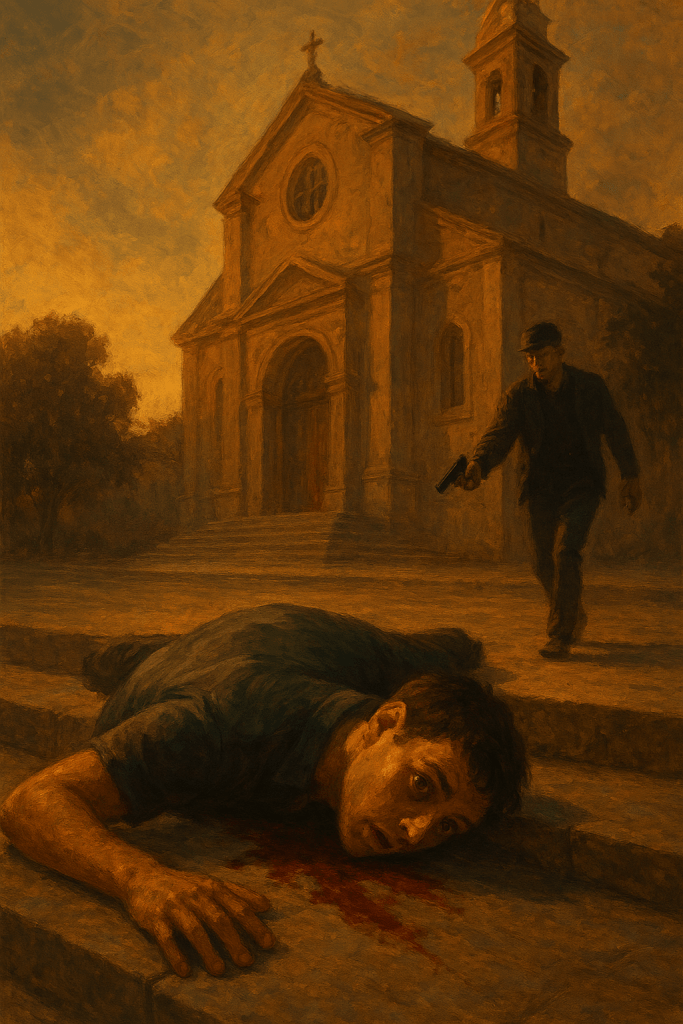





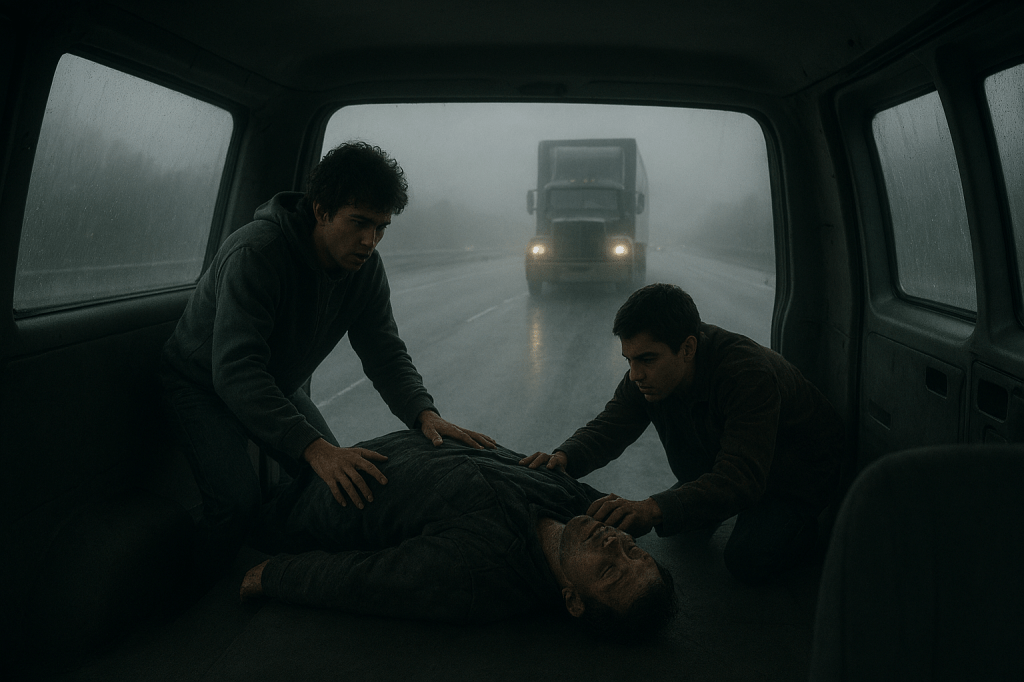





 Accomplished Ignorant — Short Stories And Other Things